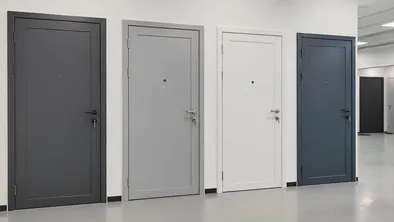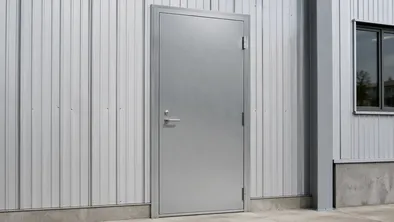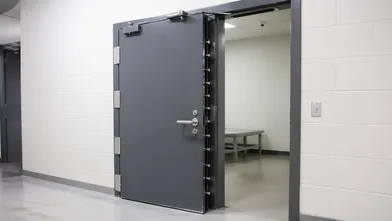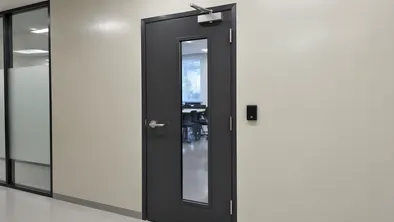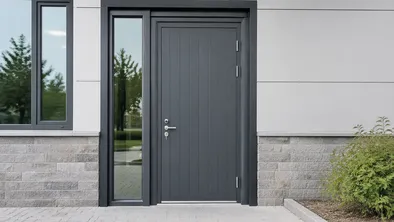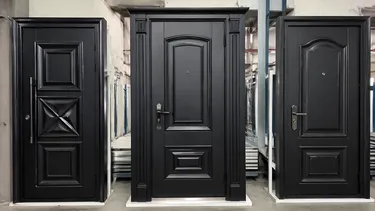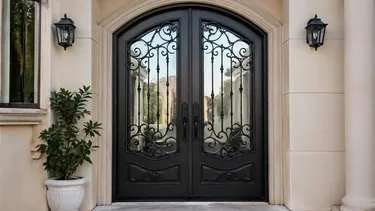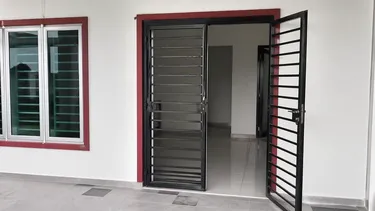

Certified fire-rated steel doors for commercial and industrial applications.
Heavy-duty security doors with multi-point locking systems.
Durable commercial door solutions for offices, retail, and warehouses.
General-purpose steel doors for industrial and institutional use.
Custom Door Solutions
15+ engineers for custom specs, private-label programs, and project support.
Start a Project →EUWOO manufactures the full commercial security door spectrum from our 18,000 m² facility in Henan, China. Steel, iron, mesh, glass, sliding, and custom configurations — one supplier, one quality system, one container.

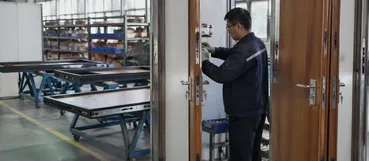
EUWOO is a security door manufacturer, not a trading company. Every unit that ships under our name comes off our own production lines at Luoyang Industrial Park, Henan — the same floor where we cut, form, weld, coat, and inspect the product. When you're evaluating a security door supplier, that distinction has direct commercial consequences: no middleman margin between your price and the factory cost, no communication lag between your spec change and the production floor, and full accountability when something needs to be resolved.
We've been manufacturing security doors since 2008. The category has grown considerably for us — what started as a standard steel door line expanded into the full security door spectrum as our export buyers in the Middle East, North America, and Southeast Asia needed more SKU coverage from a single source. Today the security door range covers 18 product lines, from entry-level residential security doors to heavy-duty commercial and institutional configurations. That breadth means your distribution catalog or project specification can be sourced from one supplier rather than split across multiple factories with different quality systems and lead time windows.
The commercial security door segment in particular has driven most of our product development over the past several years. Buyers in this segment — distributors stocking for contractors, importers building private-label lines, project procurement teams sourcing for large-scale builds — need a manufacturer who can hold dimensional tolerances across large runs, deliver consistent finish quality batch to batch, and provide the certification documentation that clears customs and satisfies building inspectors. That's the supply chain problem we're built to solve.
Learn More About Our Factory
Factory-direct pricing — your cost reflects production, not a trading layer on top.
Spec changes go straight to the production floor — no relay through a middleman.
One point of contact owns quality, lead time, and resolution — no finger-pointing.
Eighteen product lines covering the full range of security door applications — from standard residential entry to heavy-duty institutional. Each line is manufactured in-house and available for OEM/ODM customization.
Cold-rolled SPCC body, 1.0–1.5mm gauge options, powder-coated finish. The core SKU for most distribution catalogs — high volume, consistent quality, broad market applicability.
View product details
Galvanized or cold-rolled steel construction with reinforced internal framing. Suited for commercial and light industrial applications where corrosion resistance is a procurement requirement.
View product details
1.5mm+ body gauge with multi-point locking, reinforced hinge plates, and anti-pry edge profiles. Built for institutional, government, and high-security commercial applications where the door is a primary perimeter barrier.
View product details
Configured for office buildings, retail, and commercial facilities. Available with vision panels, access control prep, and a range of hardware packages to match project specs.
View product details
Weather-sealed perimeter, heavy-duty threshold, and corrosion-resistant coating system. The right spec for main entrance and perimeter applications where the door faces outdoor exposure.
View product details
Solid iron construction with traditional panel profiles. Popular in Middle Eastern and African markets where iron doors carry strong aesthetic and security associations.
Ornamental wrought iron with hand-finished detailing. Serves the premium residential and hospitality segment — buyers who need security performance with architectural presence.
Steel grill construction, ventilation-friendly, available in single and double leaf. Common in tropical markets where airflow is a functional requirement alongside security.
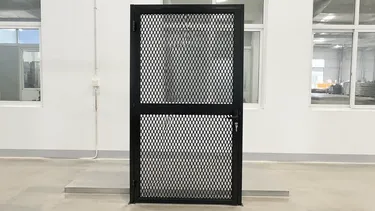
Expanded steel mesh panel in a reinforced frame. Provides visibility and ventilation while maintaining physical barrier performance — a strong SKU for residential and light commercial distribution.
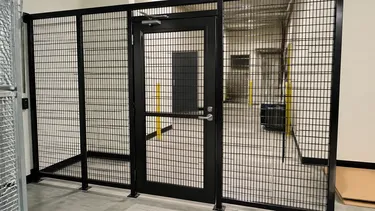
Welded wire mesh construction, heavier gauge than standard expanded mesh. Used in storage facilities, utility rooms, and commercial applications where the mesh needs to resist sustained force.
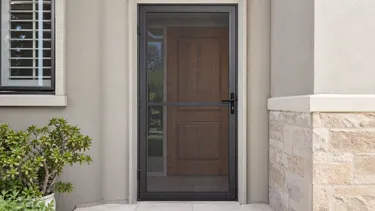
Framed security screen with fine mesh, designed for residential and light commercial use. Covers the segment where buyers want insect screening and security in a single product.
Laminated or tempered safety glass panel in a reinforced steel frame. Serves commercial lobbies, office entrances, and retail applications where visibility is a design requirement without sacrificing security.
Track-mounted sliding configuration for openings where a swing door isn't practical. Common in warehouses, parking structures, and commercial facilities with constrained floor clearance.
6063-T5 aluminium profile construction, anodized or powder-coated finish. Lighter than steel, corrosion-resistant without additional coating, suited for coastal markets and applications where weight is a constraint.
Configured for internal secure zones: server rooms, cash offices, evidence storage, and similar applications where the door needs to resist forced entry from inside the building perimeter.
Standard single-leaf configuration, the most common format for residential and light commercial applications. Available across multiple material and finish options.
Sized and configured for residential entry openings. Available with decorative panel profiles and a range of lock grades to match different market price points.
Reinforced steel frame with anchor bolt pattern and adjustable depth. Sold as a matched set with our door leaves or as a standalone component for buyers who need frames to fit existing openings.

Full Product Line
18 product lines. One manufacturer. Direct factory pricing.
Request a product catalog or ask about a specific configuration — our team responds within one business day.
Security door procurement decisions come down to three variables: body gauge, lock grade, and frame construction. Getting these wrong in either direction costs margin — over-spec for a residential application and your price point is uncompetitive; under-spec for a commercial or institutional application and you're fielding warranty claims and replacement orders.
Most Consequential Decision
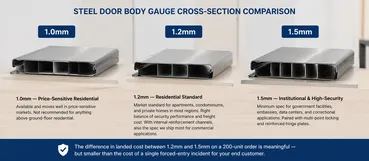
1.0mm — Price-Sensitive Residential
Available and moves well in price-sensitive markets. Not recommended for anything above ground-floor residential.
1.2mm — Residential Standard
Market standard for apartments, condominiums, and private homes in most regions. Right balance of security performance and freight cost. With internal reinforcement channels, also the spec we ship most for commercial applications.
1.5mm — Institutional & High-Security
Minimum spec for government facilities, embassies, data centers, and correctional applications. Paired with multi-point locking and reinforced hinge plates. The difference in landed cost between 1.2mm and 1.5mm on a 200-unit order is meaningful — but smaller than the cost of a single forced-entry incident for your end customer.
Most Market Variation
This is where the most variation exists across markets. North American buyers typically specify ANSI Grade 1 or Grade 2 hardware; Middle Eastern and European buyers often work to EN 12209 or local equivalents.
Why Factory Pre-Installation Matters
We pre-install hardware at the factory and configure to your market's standard. Field hardware installation is where most security door failures originate — not in the door body itself. We've seen containers arrive with correct door specs but mismatched hardware that required on-site rework. Pre-installation at the factory eliminates that variable.
ANSI
Grade 1 / 2
EN 12209
European
Local Std
On Request
Most Underestimated Component
Critical: Frame Is the Failure Point
A 1.5mm door body in a 1.0mm frame is security theater. Under forced entry, the frame fails first.
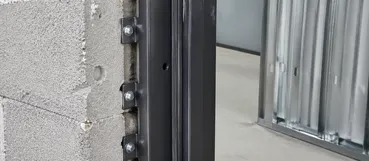
Our frames run 1.5–2.0mm gauge with a minimum of three anchor points per jamb.
Masonry installation: anchor bolt patterns matched to frame depth. Steel stud framing: clip-angle kits supplied.
Doors and frames sourced as a matched set — fit is guaranteed. Every door is tested against its frame before packing.
Spec Matching Guidance
Share your application type, target market, and volume — we'll recommend the right gauge, lock grade, and frame configuration and quote accordingly.
These are the parameter ranges across the security door product line. Individual product pages carry the exact specs for each configuration.
| Parameter | Range / Options |
|---|---|
| Body Material | Cold-rolled SPCC steel, galvanized steel, 6063-T5 aluminium, wrought iron |
| Body Gauge (steel) | 1.0mm 1.2mm standard 1.5mm heavy heavier gauge on request |
| Door Leaf Thickness | 40mm – 100mm depending on configuration and infill |
| Standard Door Sizes | 800×2000mm, 900×2000mm, 960×2100mm, 1000×2100mm; custom sizes available |
| Frame Material | Cold-rolled steel, 1.5–2.0mm gauge |
| Frame Depth | 90mm – 160mm adjustable |
| Parameter | Range / Options |
|---|---|
| Surface Treatment | Zinc phosphate pre-treatment + electrostatic powder coat |
| Powder Coat Thickness | 60–80μm |
| Color Options | 60+ standard RAL colors; custom color matching available |
| Salt Spray Rating | 500 hours (standard finish) |
| Lock Options | Single-point, multi-point (3-point, 5-point, 7-point); ANSI Grade 1/2, EN 12209 |
| Hinge Configuration | 3-hinge standard; 4-hinge on heavy-duty configurations |
| Glass Options | Tempered, laminated, frosted (where applicable) |
| Parameter | Range / Options |
|---|---|
| Certifications | ISO 9001:2015 CE SGS |
| MOQ (standard) | 50 units |
| MOQ (custom) | 100 units |
Need Full Spec Sheet?
Individual product pages carry exact specs per configuration. For a full cross-product comparison or to share with your procurement team, request the catalog directly.
Request Spec Sheet / CatalogProduct Range
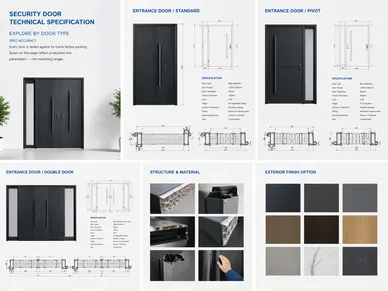
Spec Accuracy
Every door is tested against its frame before packing. Specs on this page reflect production-line parameters — not marketing ranges.
Security doors move in volume across several distinct market segments. Each has different spec requirements, order patterns, and margin dynamics — worth understanding if you're building or expanding a distribution line.
Developers sourcing for apartment blocks and housing projects typically order 200–1,000 units per project, with repeat orders tied to construction phases. The spec is usually standardized within a project — one or two SKUs in volume — which makes this segment ideal for container-load ordering.
Drives demand for commercial security doors with access control prep, vision panels, and architectural finishes. Order sizes are smaller per project but the margin per unit is higher because the spec is more complex. Growing in Southeast Asia and the Gulf as commercial construction activity increases.
Schools, hospitals, government buildings, correctional facilities — where heavy-duty security doors and multi-point locking configurations move. Procurement cycles are longer and often require certification documentation, but order sizes are large and the spec is locked once approved.
Drives demand for wire mesh doors and heavy-duty steel configurations. These buyers prioritize durability and cycle life over aesthetics — a door that gets opened 50 times a day needs different hardware and hinge engineering than a residential entry door. We configure industrial doors with heavy-duty continuous hinges and commercial-grade closers.
Where wrought iron and ornamental iron security doors move. Smaller order quantities, higher unit value, and buyers willing to pay for custom panel profiles and decorative hardware. Strong growth in the Middle East and parts of Africa. Distributors in these markets have marked these up 40–60% over standard steel doors — the ornamental work is genuinely difficult to source at consistent quality.
Residential construction rewards a narrow SKU range in high volume. Commercial and institutional segments reward spec depth and certification documentation. Industrial buyers want proven cycle life. Ornamental segments reward quality consistency that competitors can't match at scale.
Explore Steel Security Doors
Most security door failures in the field trace back to four manufacturing shortcuts. We see the evidence in the replacement orders that come to us after buyers have had problems with other suppliers.
Bubbling or peeling paint at the weld line, typically appearing within 6–18 months in humid or coastal environments.
Inadequate pre-treatment — the weld area has scale and oxidation that a simple iron phosphate wash doesn't fully remove.
We grind and re-treat every weld seam before the door enters the zinc phosphate bath. Zinc phosphate pre-treatment gives better corrosion resistance at the substrate level than iron phosphate — our finish passes a 500-hour salt spray test. For your coastal and high-humidity accounts, this is the difference between zero warranty claims and a steady stream of finish complaints.
The first 50 doors in a container fit cleanly, the last 50 require shimming or adjustment — a dimensional consistency problem that shows up during installation.
Tolerance stack-up from inconsistent CNC forming — if the press brake isn't held to a tight enough spec, small deviations accumulate across a run.
We hold ±0.5mm on cut panels and check frames against master templates after forming, before welding. Your installers get consistent fit across the full container — which matters when you're running a crew through a 200-unit apartment project on a schedule.
The most expensive warranty claim — a failed hinge means a door that won't close, which is a security and liability issue for your end customer.
Undersized hinge plates or insufficient weld attachment between the hinge plate and the door body — a common shortcut in low-cost production.
We weld hinge plates with full-perimeter welds and use 3mm plate on standard configurations, 4mm on heavy-duty. Every door is cycled through open/close testing at final inspection — we catch hinge issues before the door packs, not after it arrives.
A logistics problem that presents as a product defect — the door won't latch cleanly on arrival, generating warranty claims and installer callbacks.
Doors packed assembled and stacked in a container can rack slightly under load, shifting the lock bolt alignment enough that the door won't latch cleanly.
Our KD (knock-down) flat-pack format ships the door leaf and frame separately, eliminating the racking problem entirely and improving container loading efficiency. For buyers who need pre-hung assemblies, we use foam-lined crates with corner guards and cross-bracing to prevent movement in transit.
Our final inspection protocol covers dimensional fit, finish adhesion, hinge cycle testing, and lock alignment — the four failure points that generate the most field complaints and warranty costs. Problems are caught at the factory, not at your warehouse or your customer's job site.

A significant portion of our security door volume ships under buyers' own brand names. The OEM program is straightforward — here's what it actually covers so you can evaluate whether it fits your sourcing model.
Free, no commitment required. Send us your target spec, a reference product, or a sketch. Our 15-engineer in-house team reviews for manufacturability, flags cost or structural issues, and returns a 3D rendering with a detailed quote. Most buyers receive their first rendering within 5–7 working days of submitting specs.
Modify door panel embossing patterns, add decorative inserts, change vision panel shapes and sizes, and adjust overall door proportions within our forming equipment's capability. If you're building a private-label line that needs to look distinct from catalog products, this is where the differentiation happens.
We source and pre-install hardware to your spec. If you have an approved hardware supplier, we can work with supplied components. If you want us to source to a performance spec — ANSI Grade 1, EN 12209, etc. — we maintain approved hardware suppliers for each major market.
Your logo on the door label, your brand name on the carton, your product codes in the barcode system. The documentation package — packing list, commercial invoice — reflects your product codes, not ours.

50 units
Standard catalog models with branding changes only
100 units
Custom panel profiles or non-standard configurations
Below 100 units on a custom design, the tooling and powder line changeover cost doesn't make commercial sense for either side.
Security doors are a volume-sensitive product — container utilization directly affects your landed cost per unit, and landed cost determines your margin on resale or project markup. Here's the data.
door sets per 40HQ container
Door leaf, frame, and hardware packed separately in reinforced cartons. Standard 900×2000mm single-leaf doors.
Thicker doors (80–100mm leaf) load at the lower end; standard 45–50mm doors load at the higher end.
door sets per 40HQ container
Frame and leaf assembled, shipped in foam-lined crates with corner protection. Container utilization drops due to crating volume.
Most buyers who have a choice opt for KD format for this reason.
door sets per 20GP container
Standard single-leaf doors. The format most buyers use for trial orders and initial stocking runs.
Suitable for smaller orders or buyers who prefer 20-foot containers.
We've been loading containers for export since the early years of the business. The packaging spec has been refined through enough port-handling incidents to be reliable — including foam corner protection added after observing edge damage through Dubai port, which has a reputation for rough handling.
Complete for customs clearance in all active export markets. Ships with every order.
Active export markets: North America, EU, Gulf, Southeast Asia, Africa, Australia.

Standard catalog orders
From deposit confirmation
Custom configurations are quoted individually. Contact us with your spec and target delivery window.
If you're evaluating whether OEM makes sense for your volume, send us your current sourcing spec and target price point — we'll tell you directly whether we can hit it.
The questions buyers ask before placing a first container order. Direct answers, no hedging.
For standard commercial applications — office buildings, retail, light industrial — 1.2mm SPCC cold-rolled steel with internal reinforcement channels is the right spec. It meets the security performance requirements of most commercial building codes and keeps freight cost reasonable.
For high-security applications (government, institutional, data centers), specify 1.5mm body gauge with multi-point locking and reinforced hinge plates.
The 1.0mm option exists for price-sensitive residential markets but we don't recommend it for commercial applications — the body deflects under sustained force in a way that 1.2mm doesn't.
Ask for a factory audit or video walkthrough of the production floor. A real manufacturer can show you CNC cutting equipment, welding stations, a powder coating line, and a QC area — and the equipment will be running product, not staged for photos.
Ask for the SGS audit report, which is a third-party inspection of the facility and production process. Trading companies can hold certifications but they can't show you their own production floor because they don't have one.
We offer factory video tours and have SGS audit reports available on request.
For the US market, there's no single mandatory federal certification for standard security doors (unlike fire doors, which require NFPA 80 listing). However, many commercial projects specify ANSI/BHMA hardware grades — Grade 1 for commercial, Grade 2 for light commercial/residential — and some jurisdictions have local code requirements. For Canada, CSA standards apply to certain applications.
We configure hardware to ANSI Grade 1 or Grade 2 as specified. Our ISO 9001:2015 and SGS certifications satisfy most import compliance requirements.
If your project has a specific certification requirement, send us the spec and we'll confirm whether our product qualifies or what modifications are needed.
50 units for standard catalog models with branding or color changes only.
100 units for custom panel profiles, non-standard sizes, or hardware configurations that require tooling changes.
Below 100 units on a genuinely custom design, the setup cost makes the per-unit price uncompetitive — we'll tell you that directly rather than quote a number that doesn't make sense for your order size.
Significantly. A frame that doesn't match the rough opening depth requires shimming, which adds labor time and introduces alignment variables.
Our frames are available in 90–160mm depth with adjustable anchor configurations for both masonry and steel stud installation. We supply anchor bolt patterns and installation templates with every frame order.
If you're sourcing for a project with a specific wall construction type, tell us — we'll spec the frame depth and anchor pattern to match, which eliminates field adjustment and reduces your installer's labor cost per opening.
Yes. We can pre-install conduit runs and junction boxes for electric strike, magnetic lock, and access control reader mounting during factory assembly.
The specific prep depends on the hardware system your end customer is using — send us the hardware spec or the access control system model and we'll configure the door prep accordingly.
Pre-wiring at the factory is significantly cleaner than field modification and eliminates the risk of voiding the door's structural warranty through post-installation drilling.
Six production lines, 450,000 units annual capacity, 18 product lines covering the full security door spectrum. If you're evaluating suppliers, the fastest way to assess fit is to send us your current sourcing spec.
Our engineering team will review your door size, gauge, lock grade, finish, and target volume — then come back with a detailed quote, a 3D rendering if it's a custom configuration, and a sample lead time. Most buyers start with a sample order of 2–5 units to test with their own customers or verify against a project spec before committing to a container. We can ship samples on standard lead times.