

Residential Security Door Direct From Factory
EUWOO manufactures residential security doors from our 18,000 m² facility in Henan, China. 1.2mm SPCC cold-rolled steel body, multi-point locking, decorative panel profiles, and 60+ powder coat colors — available from 50 units with OEM/ODM support.

What Makes a Residential Security Door Different from the Rest of the Line
The residential security door occupies a specific position in the security door spectrum — and getting the spec right for this segment matters commercially. It's not a heavy-duty commercial door scaled down, and it's not a decorative iron door with security pretensions. It's a product built around three constraints that define the residential entry market: standard rough opening dimensions, a price point that works for housing developers and residential distributors, and an aesthetic that end users will actually accept in their homes.
We size residential security doors to fit the openings that residential construction actually produces: 800×2000mm, 900×2000mm, and 960×2100mm are the three formats that cover the majority of residential projects across our export markets. The door leaf runs at 45–50mm thickness — enough to house a multi-point lock body and provide meaningful forced-entry resistance without the bulk of a commercial configuration. Body gauge is 1.2mm SPCC cold-rolled steel as standard, which is the market-accepted spec for residential security in most regions and the right balance between security performance and freight cost per unit.
Where this product differs from our commercial security door and heavy-duty security door is in the panel profile and hardware configuration. Residential buyers — and the distributors and developers who supply them — want a door that looks like it belongs on a home. We offer embossed panel profiles in several standard patterns (raised panel, flat panel, and a recessed grid profile that moves well in Middle Eastern markets), plus the option to specify custom embossing on runs of 100 units or more. The lock package runs 3-point as standard, with 5-point available for markets where that's the expected residential spec.

Standard Sizing
800×2000, 900×2000, 960×2100mm — fits residential rough openings across export markets
1.2mm SPCC Steel
Market-accepted gauge for residential security — right balance of performance and freight cost
Multi-Point Lock
3-point standard, 5-point available — configured for the spec your downstream market expects
Technical Specifications
These are the standard parameters for our residential security door line. Exact specifications vary by configuration — contact us for a detailed product data sheet on any specific model.
| Parameter | Standard Specification |
|---|---|
| Door Leaf Material | 1.2mm SPCC cold-rolled steel (outer & inner skin) |
| Door Leaf Thickness | 45mm – 50mm |
| Internal Infill | Honeycomb paper core + steel reinforcement channels |
| Frame Material | Cold-rolled steel, 1.5mm gauge |
| Frame Depth | 90mm – 120mm (adjustable) |
| Standard Sizes | 800×2000mm, 900×2000mm, 960×2100mm, 1000×2100mm |
| Custom Sizes | Width 750–1100mm, Height 1900–2200mm |
| Door Weight (typical) | 40–60 kg depending on size and configuration |
| Surface Treatment | Zinc phosphate pre-treatment + electrostatic powder coat |
| Powder Coat Thickness | 60–80μm |
| Salt Spray Rating | 500 hours |
| Color Options | 60+ standard RAL colors; custom color matching on 100+ unit runs |
| Panel Profiles | Raised panel, flat panel, recessed grid; custom embossing available |
| Lock Configuration | 3-point multi-point lock (standard); 5-point available |
| Lock Standard | ANSI Grade 2 (standard); ANSI Grade 1 or EN 12209 on request |
| Hinge Configuration | 3 hinges standard; 4-hinge option available |
| Hinge Plate Thickness | 3mm welded full-perimeter |
| Certifications | ISO 9001:2015 CE SGS |
| MOQ (standard) | 50 units |
| MOQ (custom) | 100 units |
| Lead Time | 25–35 days from deposit confirmation |
Specifications shown are standard values for this product line. Actual specifications may vary by configuration. Contact us for detailed product data sheets.

Key Spec Highlights
- 1.2mm SPCC cold-rolled steel — market-standard gauge for residential security
- 45–50mm leaf thickness with honeycomb + steel reinforcement infill
- 500-hour salt spray rating — 60–80μm powder coat over zinc phosphate
- 3mm welded full-perimeter hinge plate — 3 or 4 hinge configurations
- ANSI Grade 2 standard; Grade 1 or EN 12209 available on request
- Custom sizes, width 750–1100mm; height 1900–2200mm
Compare Product Lines
Not sure if residential is the right spec for your project? See how it compares to our other lines.
Lock System and Forced-Entry Resistance: The Spec That Protects Your Downstream Reputation
The lock and frame system is where residential security doors either hold up or fail — and where most warranty claims originate. We've seen enough replacement orders from buyers who had problems with other suppliers to know exactly where the failure points are.
Our standard residential configuration runs a 3-point multi-point lock: one deadbolt at the lock body plus two additional bolt points at the top and bottom of the door leaf. The bolt points engage into reinforced steel strike boxes in the frame — not into the frame profile itself, which is the shortcut that causes strike failures under kick-in force.
The lock body is pre-installed at the factory, aligned to the frame, and cycled through open/close testing before the door packs. Lock misalignment on arrival is almost always a shipping problem, not a manufacturing one — our KD flat-pack format ships the leaf and frame separately, which eliminates the racking that causes alignment drift in transit.
The hinge side is the other failure point buyers underestimate. We weld hinge plates with full-perimeter welds and use 3mm plate on standard residential configurations. The weld attachment between the hinge plate and the door body is the structural connection that takes the full door weight plus any lateral force — undersized welds here are what cause hinge pull-out failures in the field. Every door is cycled through open/close testing at final inspection; hinge issues get caught before the door packs, not after it arrives at your customer's site.

3-Point Standard
Deadbolt plus top and bottom bolt points engaging reinforced steel strike boxes — not the frame profile.
Factory Pre-Installed
Lock body aligned and cycled at the factory. KD flat-pack shipping eliminates transit racking and alignment drift.
3mm Hinge Plate
Full-perimeter welds on 3mm plate. The structural connection that takes full door weight and lateral force.
Open/Close Cycle Test
Every door cycled at final inspection. Hinge and lock issues caught before the door packs — not at your customer's site.
5-Point Locking: The Upgrade That Differentiates Your Catalog
For markets where 5-point locking is the expected residential spec — parts of the Middle East and Southern Europe in particular — we offer a 5-point configuration with additional bolt points at mid-height on both the lock and hinge sides.
The 5-point spec adds approximately 8–12% to the unit cost but meaningfully changes the forced-entry resistance profile, and in markets where buyers know to ask for it, it's a differentiation point worth having in your catalog.
Target Markets
Middle East and Southern Europe — regions where 5-point is the expected residential standard, not an upgrade.
Cost Premium
Approximately 8–12% over the 3-point configuration. A meaningful margin opportunity in spec-aware markets.
Hardware Standards
ANSI Grade 1 for higher-security residential; EN 12209 for European projects. Specify at the spec stage — we source and pre-install to your market's standard.
Market Segments: Where Residential Security Doors Move in Volume
Residential security doors sell into several distinct segments, each with different order patterns and margin dynamics. Understanding which segments your distribution or project business serves helps determine the right SKU mix and stocking strategy.
Residential Construction Developers
A mid-size apartment project — 100–300 units — typically specifies one or two door SKUs across the entire development, ordered in phases tied to construction progress. The spec is locked early in the project and doesn't change, which means your first container establishes the template for every reorder.
Developers in Southeast Asia and the Gulf are the most active segment for us currently; residential construction activity in both regions has driven consistent volume growth over the past several years.
Residential Distributors & Hardware Wholesalers
Stock 3–5 residential security door SKUs as catalog items and sell to contractors, renovation companies, and retail hardware stores. Order patterns are smaller per transaction but more frequent — monthly or quarterly restocking rather than project-based.
Recommended Three-Tier SKU Structure
Entry-level: 1.0mm, basic panel profile, single-point lock
Mid-range: 1.2mm, decorative panel, 3-point lock
Premium: 1.2mm, custom panel profile, 5-point lock, upgraded hardware
That three-tier structure covers most of the residential market's price points and gives your downstream customers a clear upgrade path.
Renovation & Replacement
Buyers source residential security doors as direct replacements for existing openings — which means standard sizing is critical. Our 800×2000mm, 900×2000mm, and 960×2100mm formats cover the majority of residential rough openings across our export markets.
For buyers serving the renovation segment, the ability to offer a range of panel profiles and finishes matters more than it does for new construction, because the door needs to match or complement existing architectural elements.
Standard Sizes Covered
Private-Label Importers
Building their own residential door brand is a growing segment of our OEM business. The residential security door is a natural private-label product — it's a high-visibility item in the home, buyers notice the brand on the lock and the label on the frame, and a consistent aesthetic across a product line builds brand recognition.
We handle full OEM programs from 100 units: custom panel embossing, your logo on the lock escutcheon, your brand on the carton, your product codes in the documentation.
Discuss Your Target Market and Volume Requirements
Tell us which segment you're serving — residential developer, distributor, renovation, or private label — and we'll recommend the right SKU mix, stocking depth, and configuration for your market. Volume requirements, sizing priorities, and regional spec expectations all shape the right starting point.
Panel Profiles, Finishes, and the Aesthetic Spec Your Market Expects
Residential security doors sell on security performance, but they close on aesthetics. Your ability to offer the panel profile and finish that matches your market's visual expectations is a real competitive advantage.
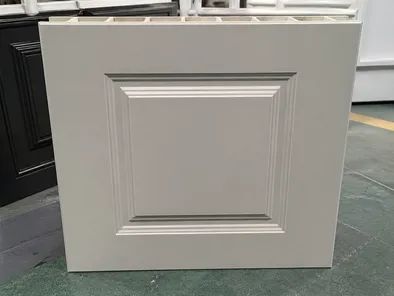
Raised Panel
The most widely distributed profile globally. Works in most residential architectural contexts and the easiest to stock because it sells everywhere — your lowest-risk catalog entry.
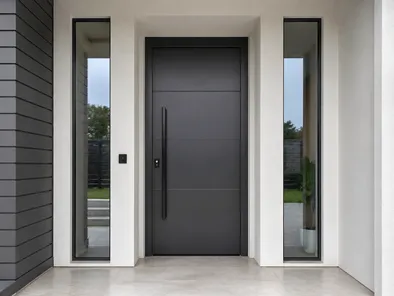
Flat Panel
Cleaner, more contemporary look. Moves well in markets with modern residential architecture — parts of Southeast Asia, urban Australia, newer Gulf developments.
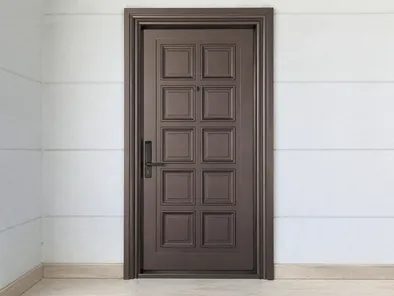
Recessed Grid
A more traditional profile with strong demand in Middle Eastern markets and parts of Africa where the grid pattern carries cultural familiarity.
Custom Embossed Panel Patterns
Beyond the three standard profiles, we can produce custom embossed panel patterns on runs of 100 units or more. The tooling cost for a new embossing die is a one-time charge that amortizes quickly across a private-label program.
If you're building a product line that needs to look distinct from catalog products, this is the most effective differentiation lever available.
Powder Coat Finish Specification
60+ Standard RAL Colors
Consistent 60–80μm film thickness across the full panel surface on the automated powder coating line.
500-Hour Salt Spray Tested
That thickness spec passes a 500-hour salt spray test — relevant for coastal and high-humidity accounts where finish durability is a real concern, not a marketing claim.
Custom Color Matching
Available on runs of 100 units or more. We match to RAL, Pantone, or a physical sample.
Glass Vision Panel Option
Available on select residential configurations — a small tempered or frosted glass insert in the upper panel section. It's a feature that moves well in markets where residents want to see who's at the door without opening it, and it adds margin without significantly changing the door's security profile.
Customization Parameters and OEM Program
The residential security door is one of our most customized product lines — buyers in this category almost always have specific requirements around size, finish, hardware, or branding. Here's what's actually adjustable and what the constraints are.
Size Customization
Width adjustable from 750mm to 1100mm, height from 1900mm to 2200mm.
Non-standard sizes are available on runs of 100 units or more. Below 100 units on a non-standard size, the setup cost makes the per-unit price uncompetitive — we'll tell you that directly.
Panel Profile
Three standard profiles available from 50 units.
Custom embossing patterns available from 100 units with one-time tooling charge.
Finish and Color
Any RAL color from 50 units (standard colors).
Custom color matching from 100 units — matched to RAL, Pantone, or a physical sample.
Lock and Hardware
3-point standard. 5-point available from 50 units. Lock grade configurable to ANSI Grade 1, ANSI Grade 2, or EN 12209.
Smart lock prep (conduit runs, junction box, electric strike prep) available on request — we configure the door prep to your specified access control system.
Glass Options
Tempered or frosted vision panel insert available on select configurations.
Specify at order stage — field modification after delivery is not recommended as it affects the door's structural integrity.
Branding
Your logo on the lock escutcheon, door label, and carton from 100 units.
Documentation (packing list, commercial invoice) reflects your product codes.
What Can't Be Customized Below 100 Units
Custom panel embossing, non-standard sizes, and custom color matching all require 100-unit minimums. The powder line changeover and tooling setup cost doesn't make sense for either side below that threshold.
| Parameter | Standard (50 units) | OEM / Custom (100 units) | Notes |
|---|---|---|---|
| Size | 750–1100mm W / 1900–2200mm H | Non-standard sizes | Setup cost uncompetitive below 100 units for non-standard |
| Panel Profile | 3 standard profiles | Custom embossing | One-time tooling charge for new embossing die |
| Finish / Color | 60+ standard RAL colors | Custom color match | RAL, Pantone, or physical sample |
| Lock System | 3-point standard; 5-point from 50 units | Smart lock prep | ANSI Grade 1/2 or EN 12209 configurable |
| Glass Insert | Tempered or frosted (select configs) | Specify at order stage | Field modification not recommended |
| Branding | — | Logo on escutcheon, label, carton | Docs reflect your product codes |
Send Us Your Spec for a Custom Quote
Tell us your target size, panel profile, finish, lock grade, and branding requirements. We'll come back with a per-unit price and MOQ confirmation — no generic catalog pricing.
Request a Custom QuoteQuality Control: What Gets Checked Before Your Container Loads
The category page covers our 5-stage QC system in detail — see the full process here. For residential security doors specifically, the checkpoints that matter most for your downstream quality are outlined below.
Dimensional Consistency Across the Run
We hold ±0.5mm on cut panels and check frames against master templates after forming, before welding.
On a 200-unit apartment project order, your installer gets consistent frame-to-leaf fit across the full container — no shimming, no field adjustment, no labor cost overrun on your project.
Weld Seam Pre-Treatment
Every weld seam is ground and re-treated before the door enters the zinc phosphate bath. This prevents powder coat adhesion failure at weld lines — the most common finish defect we see on competitor product returns.
The zinc phosphate pre-treatment gives better corrosion resistance at the substrate level than the iron phosphate wash most factories use.
100% Pre-Shipment Inspection
Every completed door is test-fitted with its frame, hardware is cycled, and the door is checked for squareness and gap consistency before packing.
No statistical sampling — 100% of units inspected. Your containers arrive right the first time.

Certifications & Third-Party Documentation
ISO 9001:2015
Quality management system certification covering the full production process.
CE Certification
European conformity marking for market access across EU member states.
SGS Audit Reports
Available on request for buyers who need third-party documentation for import compliance.
Container Loading and Landed Cost
KD flat-pack is the standard format — maximizing container utilization and eliminating the racking problem that causes lock misalignment in pre-hung assemblies.
40HQ Container
220–260
KD door sets (900×2000mm single-leaf, 45–50mm leaf)
- Standard residential sizing at upper range
- Thicker configurations or larger sizes load at lower end
- Preferred format for volume project orders
20GP Container
85–110
KD door sets (standard residential sizing)
- Most common format for trial orders
- Ideal for initial stocking runs
- Lower commitment for new market entry
KD Flat-Pack Format
Door Leaf
Packed in double-walled corrugated cartons with foam corner protection.
Frame Sections
Bundled and wrapped separately — eliminates racking that causes lock misalignment in pre-hung assemblies.
Hardware
Bagged and packed inside the door leaf carton for consolidated handling on arrival.
Traceability & Documentation
Batch-Level Traceability
Every carton carries a barcode linked to our production batch record. If there's a quality question on arrival, you can trace the unit back to its production date, line, and inspection record.
Complete Documentation Package
Complete for customs clearance in North America, the EU, the Gulf, Southeast Asia, Africa, and Australia.

Residential Security Door FAQs
Specification, compliance, and sourcing questions answered directly — the way a factory engineering team answers them, not a trading company.
What steel gauge is standard for residential security doors, and when should I specify heavier gauge?
1.2mm SPCC cold-rolled steel is the market standard for residential security doors across most export markets — it provides adequate forced-entry resistance for residential applications and keeps the door weight and freight cost at a level that works for residential price points.
The 1.0mm option exists and moves in price-sensitive markets, but we don't recommend it for anything above ground-floor residential — the body deflects under sustained lateral force in a way that 1.2mm doesn't.
If your target market is high-security residential (gated communities, high-value properties, markets with elevated security concerns), ask us about the 1.5mm reinforced configuration — it's a meaningful upgrade in forced-entry resistance and the price premium is smaller than most buyers expect.
What's the difference between a 3-point and 5-point lock system for residential doors?
A 3-point system engages one deadbolt at the lock body plus two bolt points at the top and bottom of the door leaf — this is the standard residential spec and provides solid forced-entry resistance for most residential applications.
A 5-point system adds two additional bolt points at mid-height on both the lock and hinge sides, which significantly increases resistance to kick-in and pry attacks. The 5-point spec is the expected standard in parts of the Middle East and Southern Europe; in other markets it's a premium differentiator.
The cost difference is approximately 8–12% per unit — worth it if your market knows to ask for it, and a useful upgrade story if you're building a tiered product line.
Can residential security doors be pre-wired for smart locks or video doorbells?
Yes. We can pre-install conduit runs and junction boxes for electric strike, magnetic lock, smart lock cylinder prep, and video doorbell wiring during factory assembly. The specific prep depends on the hardware system — send us the lock or doorbell model and we'll configure the door prep accordingly.
Factory pre-wiring is significantly cleaner than field drilling and eliminates the risk of compromising the door's structural integrity through post-installation modification.
What certifications do residential security doors need for import into North America or Europe?
For North America, there's no single mandatory federal certification for standard residential security doors. Most import compliance is satisfied by ISO 9001:2015 and SGS certification, which we hold. Hardware should be specified to ANSI Grade 1 or Grade 2 depending on the application.
For Europe, CE marking covers structural conformity — we hold CE certification.
If your project or jurisdiction has a specific certification requirement beyond these, send us the spec and we'll confirm whether our product qualifies or what modifications are needed.
What is the MOQ for custom panel profiles or non-standard sizes?
100 units for custom panel embossing, non-standard sizes outside our standard range, and custom color matching. 50 units for standard catalog models with color or branding changes only.
Below 100 units on a genuinely custom design, the tooling and powder line changeover cost makes the per-unit price uncompetitive — we'll tell you that directly rather than quote a number that doesn't work for your order size.
How do I evaluate whether a residential security door supplier is actually manufacturing or trading?
Ask for a factory video walkthrough showing CNC cutting equipment, welding stations, a powder coating line, and a QC area — with equipment running product, not staged. Ask for the SGS audit report, which is a third-party inspection of the facility and production process.
Ask whether they can modify the panel embossing die or adjust the frame depth — a trading company can't answer those questions from their own production floor because they don't have one.
We offer factory video tours and have SGS audit reports available on request.
Source Residential Security Doors Direct From the Manufacturer
We manufacture residential security doors in our own 18,000 m² facility in Henan, China — the same floor where we cut, form, weld, coat, and inspect every unit. No trading company layer, no middleman margin between your price and the factory cost.
If you're evaluating suppliers, the fastest way to assess fit is to send us your current sourcing spec: door size, gauge, panel profile, lock grade, finish, and target volume. Our engineering team will review it and come back with a detailed quote, a 3D rendering if it's a custom configuration, and a sample lead time.
Most new buyers in this category start with a 2–5 unit sample order to test with their own customers or verify against a project spec before committing to a container — we can ship samples on standard lead times.

- Door size (width × height, or standard range)
- Steel gauge (1.0mm / 1.2mm / 1.5mm reinforced)
- Panel profile (catalog or custom embossing)
- Lock grade (3-point or 5-point; ANSI Grade if applicable)
- Finish / color (RAL code or catalog reference)
- Target volume (sample or container quantity)