

Glass Commercial Doors Direct From Factory
Steel-framed glass commercial doors built for B2B volume — full glass, frosted, and vision panel configurations from a factory with 18+ years of export production.
Every unit ships with CE certification and passes 100% pre-shipment inspection. Standard catalog MOQ starts at 50 units; custom glazing configurations from 100 units.

What Glass Commercial Doors Are — and Where They Sit in the Commercial Door Range
Glass commercial doors are steel-framed door assemblies where the leaf incorporates a significant glazed area — ranging from a single vision lite (typically 200×400mm to 300×600mm) up to full-height glass panels that occupy 70–90% of the door face. The steel frame carries the structural load and provides the mounting points for hardware; the glass handles light transmission, visual connection between spaces, and in some configurations, acoustic or privacy management through frosted or tinted glazing.
Within our commercial door range, this product sits between standard solid steel commercial doors and fully frameless all-glass systems. The steel frame means you get the dimensional stability, hardware compatibility, and impact resistance of a steel door — with the visual openness that certain commercial environments require. That combination is what makes glass commercial doors the default specification for office corridors, retail storefronts, hospitality lobbies, and institutional buildings where both code compliance and aesthetics matter to the end client.
The distinction from our storefront commercial doors is worth noting: storefront systems are typically aluminum-framed curtain wall assemblies designed for building perimeters. Glass commercial doors in this range are steel-framed swing or sliding door leaves — they fit standard commercial door frames, use standard commercial hardware, and install the same way as any other door in a commercial project. That matters for contractors who need to spec a glazed door into an existing hollow metal frame opening without redesigning the surrounding wall assembly.
Position in the Commercial Door Range
Steel frame provides dimensional stability, hardware compatibility, and impact resistance. Glass provides light transmission and visual openness.
Contractor-Ready Installation
Fits standard commercial door frames. Uses standard commercial hardware. Installs the same way as any other door in a commercial project — no wall assembly redesign required for existing hollow metal frame openings.

Glass Configuration Options: Full Glass, Frosted, and Vision Panel
This is where the sourcing decision actually branches. Each configuration delivers a distinct commercial outcome — here's what each one means for your project and your downstream buyers.

Full Glass Commercial Doors
Tempered or laminated glass panel fills the majority of the door leaf, held in a steel perimeter frame with aluminum or steel glazing beads.
- Glass thickness: 8–12mm tempered (single-leaf); laminated 6+6mm or 8+8mm for safety glazing or acoustic performance
- Frame profile: 50–80mm wide — narrow enough to read as a glass door visually, substantial enough to carry a standard commercial lockset and three hinges without deflection
- Best for: Office building lobbies, hotel corridors, retail environments where the downstream customer is paying for the open, connected feel
Most OEM requests come from this configuration — distributors in Southeast Asia and the Gulf frequently want their own frame profile and hardware package.

Frosted Glass Commercial Doors
Same steel frame construction with acid-etched or sandblasted tempered glass. Frosting applied to the glass surface before tempering — permanent, won't peel or scratch off in service.
- Standard catalog: Full-panel frosting and gradient frosting (clear at bottom 300mm, frosted above)
- Custom patterns: Company logos, geometric patterns, partial frosting zones — available on ODM runs of 100+ units, 15–20 working day sample lead time
- Best for: Medical offices, legal firms, HR departments — visual privacy without closing off natural light
Broad market segment with consistent reorder patterns — a reliable volume driver for distributors.

Commercial Doors with Window (Vision Panel)
Solid steel door leaves with a glazed lite inserted into the panel — steel body provides structural and security performance, vision panel gives line-of-sight for safety and traffic management.
- Vision lite sizes: 200×400mm (small corridor lite) up to 400×800mm (large vision panel)
- Glass options: Wire glass, clear tempered, and Georgian wired glass — depending on fire rating requirement of the opening
- Best for: Schools, hospitals, government buildings, industrial facilities — repeatable institutional volume
A mid-size school project typically runs 80–200 vision panel doors across classroom and corridor openings — a repeatable segment with predictable spec requirements.
Technical Specifications
Values below reflect industry-standard parameters for steel-framed glass commercial doors. Contact us for exact product data sheets on specific configurations.
| Parameter | Standard Value | Notes |
|---|---|---|
| Door leaf thickness | 45–55mm | Steel frame with glass infill |
| Steel frame gauge | 1.2–1.5mm SPCC cold-rolled | 1.5mm available for high-traffic applications |
| Glass type | 8–12mm tempered (standard) | Laminated available on request |
| Glass area (full glass) | 70–90% of door face | Steel perimeter frame retained |
| Vision lite size range | 200×400mm – 400×800mm | Custom sizes available |
| Standard door sizes | W700–1000mm × H2000–2400mm | Custom sizes from 100 units |
| Frame profile width | 50–80mm | Varies by configuration |
| Surface finish | Powder coat, 60–80μm | 60+ RAL colors |
| Hardware prep | Mortise lock, 3-hinge, closer reinforcement | Pre-drilled, pre-welded |
| Weight (typical single leaf) | 35–65kg | Varies by glass area and size |
| Certifications | CE ISO 9001:2015 SGS | NFPA 80 for fire-rated variants |
Frame Gauge: 1.2mm vs 1.5mm
The standard catalog runs at 1.2mm SPCC — the spec that handles normal commercial traffic without over-engineering the weight. For high-abuse environments (school corridors, hospital wards, public transit facilities), the 1.5mm option adds roughly 8–12% to unit weight but meaningfully extends service life at hinge and lock points.
Most buyers in institutional segments land on 1.5mm once they've had a conversation about replacement cycle costs. If you're specifying for a high-traffic application, that conversation is worth having before the order is placed.

Specifications shown are industry-standard values for this product type. Actual specifications may vary by configuration. Contact us for detailed product data sheets.
Market Segments Where Glass Commercial Doors Generate Repeatable Volume
Understanding where volume concentrates helps distributors and contractors prioritize product line decisions. Each segment below has distinct procurement patterns, specification drivers, and reorder dynamics.
Office Fit-Out & Commercial Tenancy
Highest-volume segment
Full glass and frosted configurations dominate this segment. Commercial fit-out contractors and interior fit-out distributors typically work on 3–6 month project cycles, with door quantities ranging from 20–150 units per project depending on floor plate size.
The spec is usually driven by the architect or interior designer — which means the distributor who gets on the approved product list early captures the volume. Glass commercial doors in this segment command a meaningful premium over solid steel.
Healthcare & Medical Facilities
Vision panel & frosted configurations
Infection control requirements mean doors need to be wipeable and hardware needs to be lever-operated — both accommodated by the standard hardware package. Hospital procurement typically runs through GPO frameworks in North America, meaning once you're qualified as a supplier, reorder volume is predictable and multi-year.
The vision panel spec in healthcare is non-negotiable in most markets: patient room doors, corridor doors, and clinical area entries all require line-of-sight panels for staff safety protocols.
Hospitality & Retail
Full glass & custom frosted
Particularly strong in markets where new hotel and retail construction is active — Southeast Asia, the Gulf, and parts of Africa. Hotel corridor doors in a mid-scale property run 150–400 units per project; retail chain rollouts can run 50–200 units per location across multiple locations simultaneously.
The OEM opportunity in this segment is real: hotel chains and retail brands frequently want private-label hardware and custom frame finishes to match their brand standards. This is handled through the ODM program — send a brand spec sheet and we'll quote the custom configuration.
Institutional & Government Buildings
Vision panel — core market
Schools, government offices, courthouses, transit facilities — these projects are typically publicly tendered, meaning the spec is written in advance and the buyer is looking for a supplier who can document compliance (CE, ISO 9001:2015, test reports) and deliver on schedule.
450,000-unit annual capacity means a 500-unit government tender doesn't create a scheduling problem. This segment has grown steadily in the Middle East and Southeast Asia — worth building relationships with government project contractors if you're active in those markets.
Discuss your target market segment with our team
Whether you're entering a new segment or scaling an existing product line, we can walk through configuration options, MOQ thresholds, and ODM scope for your specific market.
Glass Selection for Commercial Applications: What the Spec Actually Means
Buyers sourcing glass commercial doors for the first time sometimes treat glass type as a cosmetic choice. It isn't — the glass specification affects safety compliance, insurance liability, and downstream warranty exposure. Here's how we think about it from the production side.
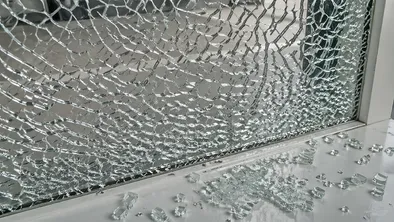
Tempered Glass
Heat-treated to increase surface compression. When it breaks, it shatters into small blunt fragments rather than large sharp shards — the standard for commercial door applications under ANSI Z97.1, EN 12150, and Gulf building codes.
- 8mm tempered — vision panel configurations
- 10–12mm tempered — full glass doors (larger unsupported area)
- Glass supplier test certificates available with shipment
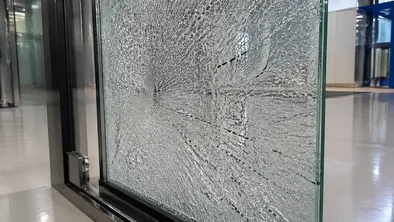
Laminated Glass
Two or more glass layers bonded with a PVB (polyvinyl butyral) interlayer. When it breaks, fragments stay adhered — the door remains intact as a barrier even after impact. Specified where post-breakage barrier integrity matters.
- Secure areas, schools, post-impact barrier applications
- 6+6mm (12mm total) or 8+8mm (16mm total) standard specs
- Higher cost and weight vs. tempered — recommended only when application requires it
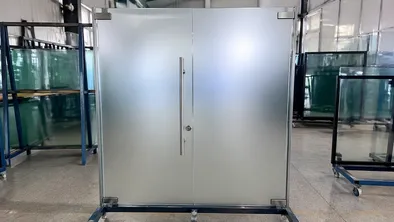
Frosted / Acid-Etched Glass
Tempered first, then surface-treated. The sequence matters: tempering must happen before etching because you can't temper after etching without destroying the surface texture.
- Our frosted glass is etched post-tempering — consistent surface stress distribution
- Etch-before-temper produces inconsistent stress — higher spontaneous breakage in service
- Warranty exposure lands on the distributor, not the factory — verify your supplier's sequence
Safety Glazing Certification Documentation
If your downstream market requires safety glazing certification documentation, we can provide the glass supplier's test certificates with the shipment. Request this at the time of order confirmation.
Customization Parameters and OEM/ODM Scope
Standard catalog glass commercial doors ship from 50 units MOQ. Custom configurations — non-standard sizes, custom frame profiles, private-label hardware, custom glass patterns — start at 100 units, which is where the powder line changeover and tooling cost makes sense for both sides.
What Can Be Customized
-
Door Leaf Dimensions Width 600–1200mm, height 1800–2800mm. Outside these ranges, consult us on structural feasibility.
-
Frame Profile Standard square profile or custom architectural profiles. Custom profiles require tooling, quoted per project.
-
Glass Type and Thickness Tempered, laminated, frosted, tinted, low-E, wired. Specify your requirement and we'll confirm availability and lead time.
-
Glass Area and Lite Position Full glass, partial glass, vision lite size and position within the door panel.
-
Frosting Pattern Full panel, gradient, custom logo or geometric pattern. ODM, 100+ units.
-
Surface Finish Any RAL color from our 60+ color library. Custom RAL matching available on 200+ unit runs.
-
Hardware Package Mortise lockset brand and grade, hinge specification, door closer specification, panic hardware prep.
-
Frame Configuration Single rebate, double rebate, transom, sidelite. Specify the opening and we'll design the frame.
Requires Engineering Review
-
Glass Area >90% of Door Face On standard frame profiles. Structural review required before production confirmation.
-
Door Leaf Weight >80kg Hinge and frame reinforcement required. Consult us before specifying heavy laminated configurations.
-
Fire-Rated Glass Configurations Separate product line with dedicated certification. See our glass fire door range.

OEM Private-Label Programs
Our 15-engineer R&D team handles the full development path: spec review, 3D rendering, prototype, production sign-off. No charge for the design consultation.
MOQ Reference by Configuration Type
| Configuration | MOQ | Notes |
|---|---|---|
| Standard catalog | 50 units | Standard sizes, standard finishes, catalog hardware |
| Custom size / frame / glass / hardware | 100 units | Powder line changeover and tooling cost threshold |
| Custom frosting pattern / ODM logo | 100 units | Full panel, gradient, geometric, or logo pattern |
| Custom RAL color matching | 200 units | Outside standard 60+ color library |
Production Process: How the Glass Integration Is Handled
The glass integration step is where most quality problems in this product category originate. Here's how we handle it — and why the sequence matters.
Frame Fabrication First
The steel frame is CNC laser cut, press brake formed, and MIG welded on our standard production lines. The glazing rebate — the channel that holds the glass — is formed into the frame profile during press brake forming, not added as a secondary operation.
A formed rebate has consistent depth and squareness across the full perimeter. A secondary-machined rebate can vary, which creates uneven glass seating and stress concentration points that lead to spontaneous breakage in service.
EPDM Gaskets + Structural Silicone
After frame fabrication and powder coating, glass is installed using EPDM glazing gaskets on the interior perimeter and structural silicone sealant on the exterior bead. We use EPDM rather than PVC gaskets because EPDM maintains its compression set over a wider temperature range.
This matters for containers sitting on a dock in Dubai in August or a warehouse in Minnesota in January. The silicone bead is applied with a pneumatic gun to a consistent bead profile, then tooled flat before cure.
100% Pre-Shipment Inspection
Every glazed door is inspected for glass seating, gasket continuity, and silicone bead integrity before it moves to final assembly. Hardware is pre-installed at the factory — hinges welded and mortise lock pocket pre-cut — so the door arrives ready for hanging.
Pre-installing hardware before shipment reduces site installation time and eliminates the most common field error: incorrect hinge placement that causes the door to bind in the frame.

Production Sequence at a Glance
-
1
CNC Laser Cut + Press Brake Form
Glazing rebate formed in-profile during press brake — not machined secondarily
-
2
MIG Weld + Powder Coat
Frame completed and finished before glass installation begins
-
3
EPDM Gasket Install (Interior)
Full perimeter gasket — consistent compression set across temperature range
-
4
Structural Silicone Bead (Exterior)
Pneumatic gun application, tooled flat before cure
-
5
QC Inspection + Hardware Pre-Install
Glass seating, gasket continuity, silicone bead — then hinges welded, lock pocket pre-cut
Why the Rebate Formation Method Matters to Buyers
When evaluating competing suppliers, ask specifically whether the glazing rebate is formed during press brake or machined as a secondary operation. A formed rebate is a structural indicator of process discipline — it's harder to do correctly but produces a more consistent result. Secondary-machined rebates are a common cost-cutting shortcut that shows up as glass breakage claims 12–24 months into service.
Packaging, Container Loading, and Landed Cost Factors
Glass commercial doors require more protective packaging than solid steel doors. The glass panel is the vulnerability, and damage in transit is the most common source of warranty claims in this product category.
Standard Packaging Specification
Foam-Lined Wooden Crate
Corner protection on the frame, foam pad between glass face and crate face on both sides.
Corrugated Cardboard Interleaf
Applied to both glass faces as an additional protection layer against surface contact damage.
Internal Cross-Brace (Full Glass Doors)
Prevents racking during container movement. Developed after observing damage patterns on early export shipments. Adds ~$3 per unit in packaging cost and eliminates the glass breakage claims that were running at 2–3% on unbraced crates.
OEM & Distribution Packaging Options
For buyers running e-commerce or distribution warehouse operations, we can configure packaging for direct-to-site delivery:
- Individual carton labeling, barcode-linked to our production batch record
- Installation hardware packed separately in a labeled accessory bag
- White-label packaging (your brand, your SKU labeling) available on OEM orders
Container Loading Reference
Use these figures as the basis for landed cost calculations. We'll confirm exact loading quantities when we quote your specific order — actual loading depends on frame configuration and crate dimensions.
Standard Single-Leaf Glass Commercial Doors
| Container | Door Size (approx.) | Units per Container |
|---|---|---|
| 20GP | W900 × H2100mm | 80–100 units |
| 40HQ | W900 × H2100mm | 180–220 units |
| 40HQ | W900 × H2400mm | 150–180 units |

Landed Cost Planning
Use the container loading figures above as your baseline for freight cost calculations. Your freight team should confirm with us at quote stage — we'll provide exact crate dimensions and gross weights per unit.
Batch Traceability
Every carton barcode links to our production batch record. If a warranty claim arises, we can trace the unit back to the specific production run, glass batch, and inspection record — reducing claim resolution time significantly.
White-Label OEM Packaging
OEM orders can ship in your brand packaging with your SKU labeling. Minimum order quantities and lead time for custom packaging apply — confirm at RFQ stage.
Compliance and Certification for Your Target Market
CE, ISO 9001:2015, ANSI/BHMA, and SGS documentation — matched to your destination market and import compliance requirements.
European Market
CE certification covers our glass commercial doors for the European market. The CE mark on a door assembly addresses structural performance, hardware function, and where applicable, fire resistance. Our ISO 9001:2015 certification documents the quality management system behind every unit.
SGS third-party audit reports are available on request for buyers who need independent documentation for their own import compliance files.
North American Market
The relevant standard for commercial door hardware and assembly is ANSI/BHMA. Our standard hardware packages are specified to ANSI Grade 1 (heavy commercial) or Grade 2 (standard commercial) depending on the configuration — confirm your requirement when ordering.
The glass specification in our standard catalog meets ANSI Z97.1 safety glazing requirements for tempered glass in door applications.
Fire-Rated Applications
For fire-rated glass door applications — where the glazed assembly needs to carry a fire rating (20-minute, 45-minute, 60-minute, or 90-minute) — that is a separate product with dedicated certification.
Standard glass commercial doors in this range are not fire-rated and should not be specified in fire-rated openings.
View Glass Fire Door RangeDocumentation Available on Request
SGS third-party audit reports, CE declaration of conformity, and ISO 9001:2015 certification documents are available for buyers who need independent documentation for import compliance files. Learn about our manufacturing certifications and quality system.
Selecting the Right Configuration: Glass Commercial Doors vs. Sibling Products
Glass commercial doors are the right choice for steel-framed glazed interior applications where fire rating is not required. Here is how they compare against the rest of the commercial range.
Commercial Steel Doors
Need maximum security with minimal glass?
Solid steel leaf, no glazing, full security performance. The right choice when visibility is not a requirement and security is the primary specification driver.
Glass Fire Doors
Need a glazed door that carries a fire rating?
Fire-rated steel frame with certified fire-rated glazing, tested to NFPA 80 or EN 1634. Required for fire-rated openings at 20, 45, 60, or 90-minute ratings.
Storefront Commercial Doors
Need a full storefront system with sidelites and transoms?
Aluminum curtain wall system for exterior applications. The right choice for building perimeter glazing with integrated sidelites and transoms.
Exterior Commercial Doors
Need a glazed door for a high-traffic exterior entrance?
Weathersealed, heavy-duty hardware, exterior-rated finish. Designed for high-traffic exterior entrances where weatherproofing and durability are primary requirements.
Double Commercial Doors
Need a double-leaf glazed opening for a lobby or conference room?
Double-leaf configuration with active/inactive leaf coordination hardware. Suited to lobbies, conference rooms, and wide interior openings requiring a glazed double-door assembly.
Glass Commercial Doors — This Range
The right choice when:
Steel-framed glazed door for interior commercial applications — office corridors, retail interiors, hospitality, institutional buildings — where fire rating is not required and the opening fits standard commercial door dimensions.
Frequently Asked Questions
What glass thickness should I specify for a full glass commercial door?
For standard single-leaf full glass doors (W900 × H2100mm), 10mm tempered is the typical specification — it provides adequate rigidity across the unsupported glass area without excessive weight. For larger doors (above H2400mm or W1000mm), move to 12mm tempered. If the application requires post-breakage barrier integrity (secure areas, schools in certain jurisdictions), specify 6+6mm laminated instead. We'll confirm the appropriate spec for your exact door size when you send us the dimensions.
Can frosted glass commercial doors be specified with a custom logo or pattern?
Yes — custom frosting patterns (logos, geometric designs, partial frosting zones) are available on ODM runs of 100+ units. The pattern is applied via CNC-controlled sandblasting or acid etching after tempering. Lead time from artwork approval to first sample is 15–20 working days. Send us your artwork file (vector format preferred) and we'll confirm feasibility and quote the tooling cost.
What is the MOQ for glass commercial doors, and how does it change for custom configurations?
Standard catalog configurations (full glass, frosted, vision panel in standard sizes and RAL colors): 50 units MOQ. Custom sizes, custom frame profiles, custom glass patterns, or private-label hardware packages: 100 units MOQ. Custom RAL color matching outside our standard 60+ color library: 200 units minimum for the powder line changeover to make sense.
Are these doors suitable for exterior applications?
Standard catalog glass commercial doors are designed for interior commercial applications. For exterior use, the door needs weathersealing on the frame perimeter, a threshold with drainage, and a surface finish spec that passes a higher salt spray threshold for outdoor exposure. We can configure exterior-rated glass commercial doors on custom orders — specify your climate zone and exposure conditions and we'll recommend the appropriate weatherseal and finish spec. Alternatively, see our exterior commercial doors range for exterior-rated configurations.
What certifications do glass commercial doors from EUWOO carry?
CE (European conformity), ISO 9001:2015 (quality management system), and SGS third-party audit. For fire-rated glazed door applications, see our glass fire door range, which carries NFPA 80 certification. Standard glass commercial doors in this range are not fire-rated.
What is the lead time for a standard catalog order?
25–35 working days from deposit confirmation for standard catalog configurations. Custom configurations (non-standard sizes, custom glass patterns, OEM hardware packages) are quoted individually based on engineering complexity — typically 35–50 working days for first production run.
Get a Quote for Glass Commercial Doors
Send us your project specs — door quantity, configuration (full glass, frosted, or vision panel), size requirements, target market, and any hardware or finish requirements. Our engineering team will review and respond with a detailed quote. If you're evaluating a custom configuration or OEM program, include a reference image or spec sheet and we'll come back with a 3D rendering at no charge.
New to this product category? Tell us your target market and volume expectations — we can suggest a starter SKU mix based on what's moving for our existing distributors in your region.