
The Sourcing Problem Behind Every Fire Door RFQ
If you're sourcing fire-rated doors for a commercial or industrial project in the US, you already know the basics: the door needs a valid fire rating, the label has to match the opening, and the AHJ will reject anything that doesn't comply with NFPA 80. What's harder to figure out is which supplier model actually fits your procurement situation — because the US fire door market is split across large integrated manufacturers, regional fabricators, quick-ship distributors, and overseas factories, and each model trades off differently on price, lead time, customization, and documentation.
Most supplier lists online give you brand names and move on. That's not enough when you're comparing a 500-door hospital project against a 50-unit tenant improvement, or when you're an importer building a private-label fire door program and need container-scale pricing with traceable QC. The supplier that's right for a rush replacement order is rarely the best fit for a multi-year distribution contract.
This guide covers 10 real fire door suppliers serving the US market — domestic manufacturers, distributors, and specialists — then explains where factory-direct import sourcing fits for buyers whose volume, margin targets, or customization needs outgrow what the domestic channel offers.
How to Evaluate a Fire Door Supplier Before You Send an RFQ
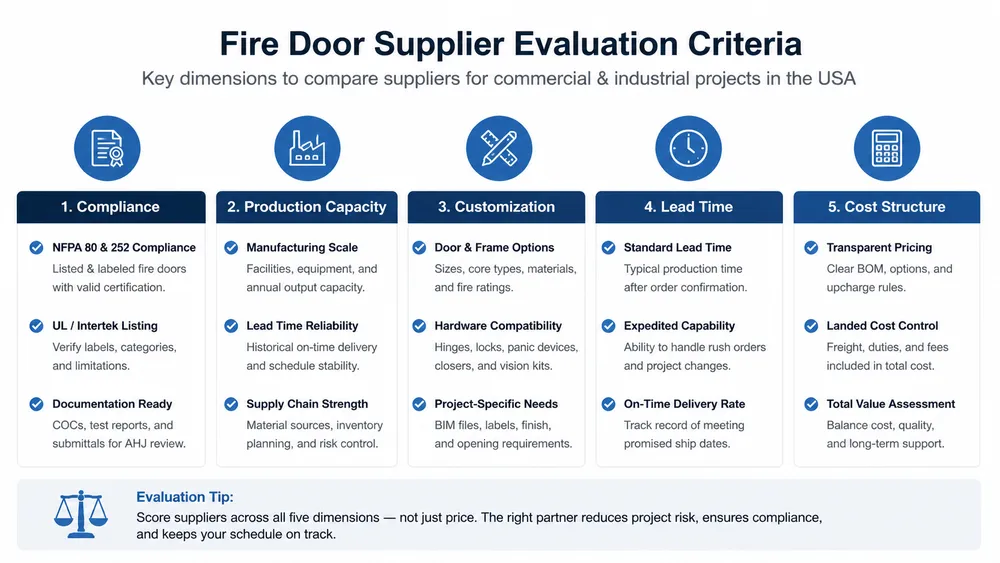
Before comparing specific companies, it helps to know what separates a reliable fire door supplier from one that will cost you time and rework. These are the criteria that matter at the procurement level — not marketing claims, but the things that determine whether your doors arrive compliant, on time, and within budget.
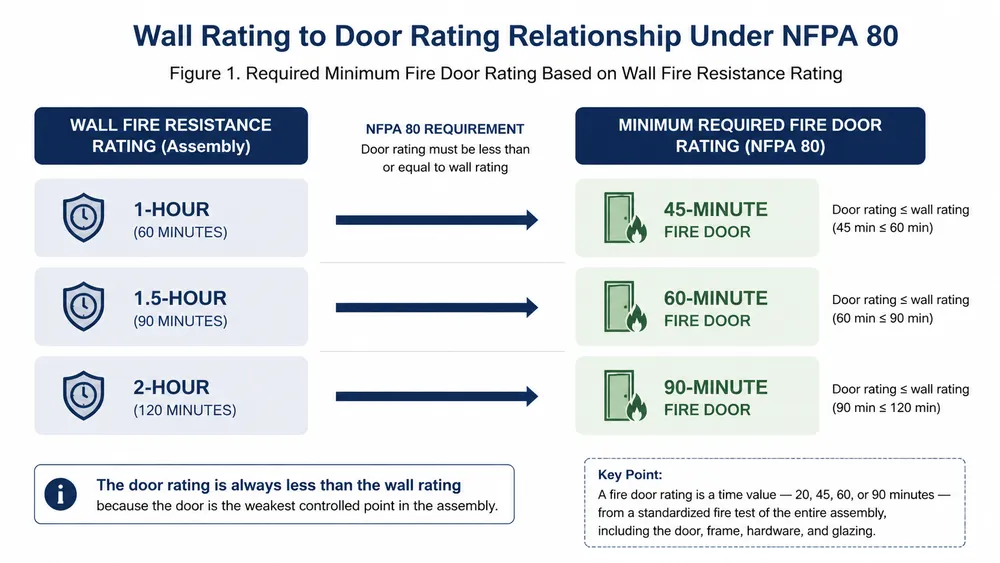
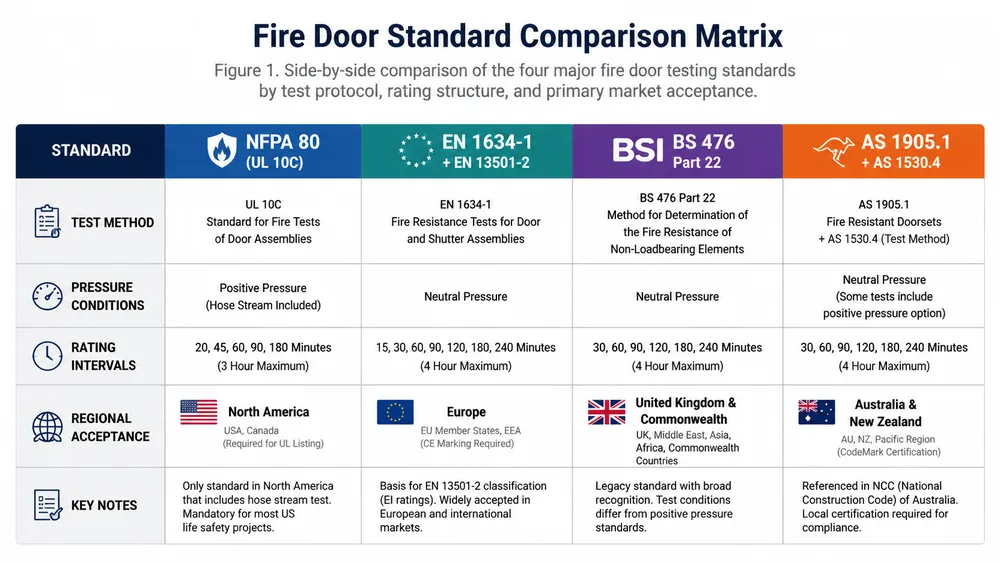
Fire rating and labeling documentation. Every fire door needs a valid label from an accredited testing lab (UL, Intertek/WHI, or equivalent). The supplier should be able to confirm the specific listing number, the test standard (UL 10C, UL 10B, or NFPA 252), and the rating (20-min, 45-min, 60-min, 90-min, or 3-hour). If they can't produce this documentation before you order, that's a red flag — you'll be chasing paper when the inspector shows up.
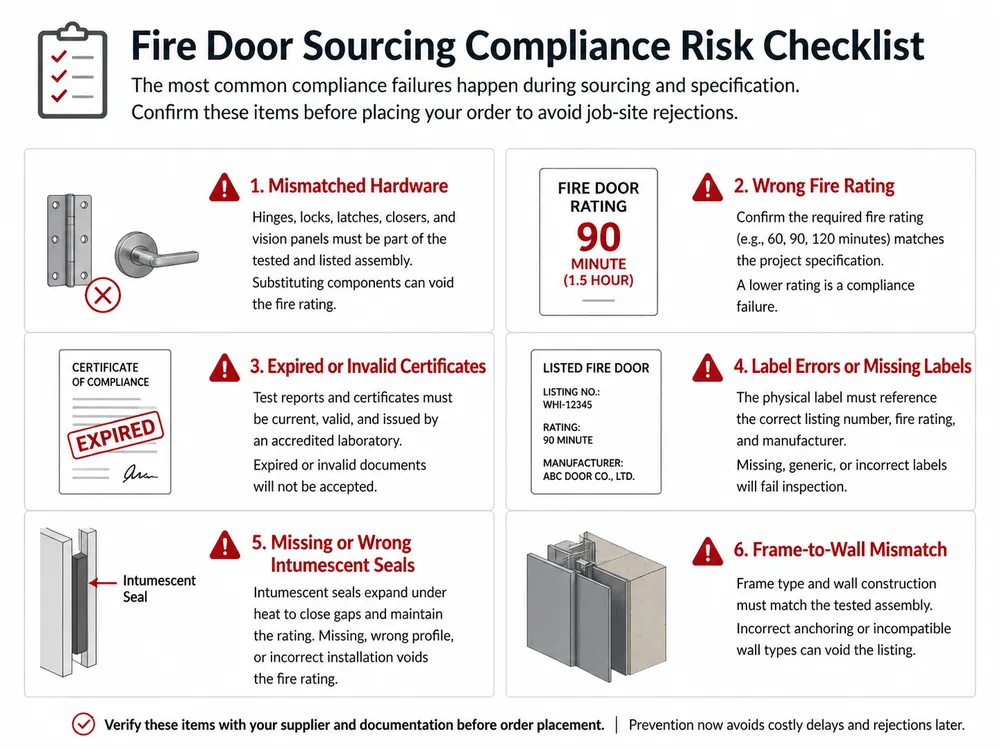
Door and frame construction. For hollow metal fire doors, ask about steel gauge (16-ga and 18-ga are standard for commercial fire doors), core material (mineral core, polystyrene, or steel stiffened), and edge construction. The frame matters just as much — a fire-rated door in a non-rated frame is a failed assembly, and the AHJ won't sign off on it.
Hardware prep and compatibility. Fire doors ship with specific preps for hinges, locksets, closers, and exit devices. If the supplier's standard prep doesn't match your specified hardware, you need to know that before production — field modification of a labeled fire door voids the listing. (I've seen containers of doors arrive with the wrong hinge prep because the buyer assumed "standard" meant the same thing to both parties. It's a $15 conversation that prevents a $15,000 problem.)
Customization range. Standard catalog fire doors cover most openings, but commercial projects regularly need non-standard sizes, vision lite cutouts, specific glazing ratings, custom finishes, or transom panels. Some suppliers handle this routinely; others treat every custom request as a special order with a 4-week adder.
Lead time and capacity. Domestic manufacturers typically quote 4–8 weeks for standard fire doors and 8–12 weeks for custom. Quick-ship distributors can deliver in 2–5 days from stock. Factory-direct import runs 30–45 days plus ocean freight. The right lead time depends on your project schedule and whether you're buying for a single job or stocking inventory.
Compliance documentation package. Beyond the door label, you may need mill test reports, fire test reports, product data sheets, and installation instructions for the project file. Suppliers who export regularly tend to have this documentation standardized; smaller regional shops may need to pull it together on request.
10 Fire Door Suppliers Serving the US Commercial Market
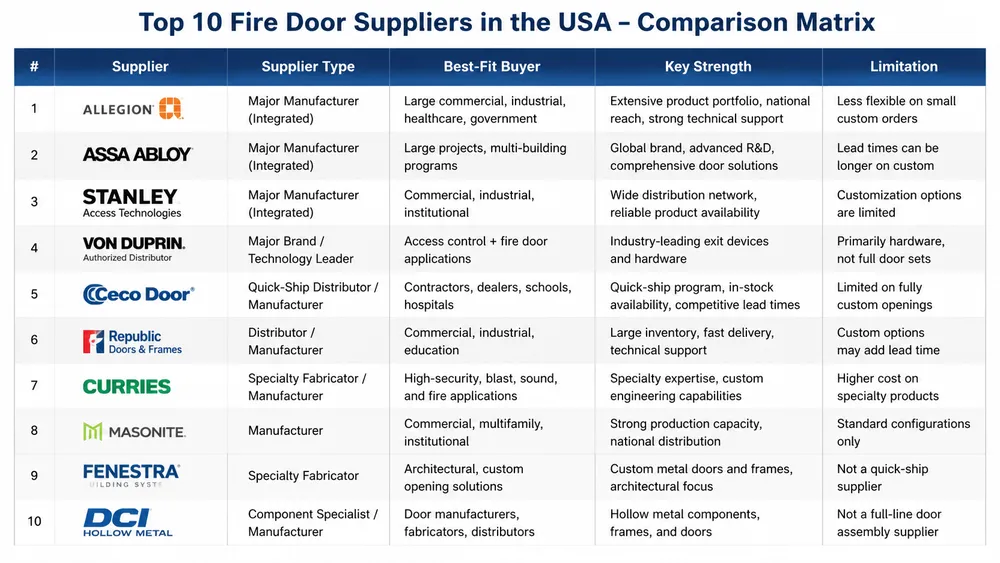
The companies below represent the range of supplier models available to US buyers — from large integrated manufacturers with national distribution to regional specialists and quick-ship operations. This is a sourcing landscape, not a ranked competition. Your best supplier depends on your project size, timeline, customization needs, and cost structure.
1. Ceco Door (ASSA ABLOY)
Supplier type: Major integrated manufacturer Website: cecodoor.com
Ceco Door is one of the largest hollow metal door and frame manufacturers in North America, operating under the ASSA ABLOY group. They produce fire-rated hollow metal doors and frames across multiple US manufacturing facilities, covering ratings from 20 minutes to 3 hours. Ceco's strength is scale and specification depth — they maintain UL and WHI listings across a wide range of configurations, and their product data integrates with major architectural specification platforms.
For large commercial projects where the architect has already specified Ceco by name, the procurement path is straightforward through their distributor network. The trade-off: lead times on custom configurations can stretch, and pricing runs through distribution layers that add margin at each step. If you're a distributor or importer looking for private-label supply, Ceco is a competitor, not a sourcing partner.
2. Steelcraft (Allegion)
Supplier type: Major integrated manufacturer Website: allegion.com (Steelcraft brand)
Steelcraft is Allegion's hollow metal door and frame brand, with manufacturing in the US and a distribution network that covers most major metro markets. Their fire-rated product line includes standard and custom hollow metal doors, frames, and borrowed lite assemblies. Steelcraft's specification tools and BIM objects make them a common choice on architect-driven projects.
Similar to Ceco, Steelcraft's distribution model means your landed cost includes manufacturer margin plus distributor margin. Their strength is specification compliance and project documentation — if you're bidding a job where the spec names Steelcraft, you're buying Steelcraft. For open-spec projects where you have substitution flexibility, the cost comparison against other sources is worth running.
3. Republic Doors and Frames
Supplier type: Domestic manufacturer Website: republicdoor.com
Republic Doors and Frames manufactures hollow metal doors and frames in McKenzie, Tennessee. They cover standard and custom fire-rated configurations and have built a reputation for handling mid-size commercial projects where the order isn't large enough to get priority attention from the biggest manufacturers but still needs full compliance documentation.
Republic's value proposition sits in the middle of the market — more responsive than the largest manufacturers on custom work, with domestic production that keeps lead times shorter than import alternatives. They're a solid option for contractors and regional distributors who need reliable fire door supply without the overhead of navigating a global manufacturer's distribution chain.
4. CURRIES (ASSA ABLOY)
Supplier type: Major integrated manufacturer Website: curries.com
CURRIES is another ASSA ABLOY brand, manufacturing hollow metal doors and frames with a focus on commercial and institutional projects. Their product range overlaps with Ceco in many areas, but CURRIES has historically been strong in the education and healthcare segments where fire-rated openings are specified in high volume.
The procurement dynamic is similar to other ASSA ABLOY brands — you're buying through authorized distributors, and the pricing reflects the full distribution chain. CURRIES' fire door listings are well-documented, and their frames are widely specified by architects in the institutional space.
5. Mesker Door
Supplier type: Domestic manufacturer Website: meskerdoor.com
Mesker has been manufacturing hollow metal doors and frames since the 1800s — one of the oldest names in the US door industry. Based in Huntington, Indiana, they produce fire-rated doors and frames for commercial, industrial, and institutional applications. Mesker's product line covers standard and custom configurations, and they maintain UL listings across their fire-rated range.
Mesker's appeal is domestic manufacturing with a long track record. They're particularly known in the industrial and institutional segments. For buyers who value a direct relationship with a US manufacturer (rather than buying through a multi-brand distributor), Mesker is worth including in your RFQ set.
6. Trudoor
Supplier type: Quick-ship distributor / fabricator Website: trudoor.com
Trudoor operates a different model from the large manufacturers — they focus on fast turnaround for hollow metal doors and frames, including fire-rated configurations. Their value proposition is speed: stock doors and frames can ship in 2–5 business days, and custom orders move faster than typical manufacturer lead times.
If you need fire doors for a project that's already behind schedule, or you're replacing a failed unit before an inspection, Trudoor's quick-ship model solves a real problem. The trade-off is that their pricing reflects the speed premium, and their customization range is narrower than what a full manufacturer offers. For emergency and small-quantity needs, they're hard to beat on turnaround. For 500-door projects, the economics point elsewhere.
7. National Guard Products (NGP)
Supplier type: Fire door hardware and component specialist Website: quincyil.com (National Guard Products)
NGP is not a door manufacturer — they specialize in fire door hardware, gasketing, thresholds, and sealing systems. I'm including them because fire door compliance isn't just about the door leaf; it's about the complete assembly. NGP's fire-rated gasketing and intumescent seals are specified on a large percentage of commercial fire door installations in the US, and their technical documentation is some of the best in the industry for helping buyers understand assembly-level compliance.
If your fire door supplier doesn't address gasketing and sealing as part of the assembly, NGP fills that gap. They're a complementary supplier, not a replacement for a door manufacturer — but ignoring the hardware and sealing side of fire door procurement is how assemblies fail inspection.
8. Hollow Metal Xpress (HMX)
Supplier type: Quick-ship distributor Website: hollowmetalxpress.com
HMX focuses on fast delivery of hollow metal doors and frames, including fire-rated units. They stock standard sizes and configurations for quick turnaround and can handle custom orders on shorter timelines than most full-line manufacturers. Their model is similar to Trudoor's — speed and convenience for buyers who can't wait 6–8 weeks.
HMX is a good option for small-to-medium orders where time is the primary constraint. For large-volume procurement or projects requiring extensive customization, you'll likely need to go upstream to a manufacturer or consider factory-direct sourcing.
9. Ambico
Supplier type: Specialty manufacturer (blast, bullet, and fire-rated) Website: ambico.com
Ambico manufactures specialty steel doors including fire-rated, blast-resistant, and bullet-resistant configurations. Based in Canada with distribution into the US market, they serve projects where the fire door also needs to meet additional performance requirements — government buildings, embassies, data centers, and high-security facilities.
Ambico occupies a niche that the large commodity manufacturers don't prioritize. If your project requires a fire-rated door that also meets forced-entry resistance or blast criteria, Ambico is one of the few manufacturers with tested and listed products in that overlap zone. For standard commercial fire doors without specialty requirements, their pricing will be higher than commodity alternatives.
10. DCI Hollow Metal
Supplier type: Regional manufacturer / custom fabricator Website: dcihollowmetal.com
DCI Hollow Metal is a custom hollow metal door and frame fabricator serving the US market. They handle non-standard sizes, unusual frame configurations, and project-specific requirements that fall outside the standard catalogs of the major manufacturers. Their fire-rated products carry appropriate listings, and they're known for working directly with contractors on field-condition challenges.
DCI's strength is flexibility on custom work — the kind of openings where the field conditions don't match any standard catalog size and someone needs to fabricate a solution that still carries a fire rating. For standard high-volume orders, the major manufacturers will be more cost-effective. For the 15% of openings on a project that don't fit the catalog, a fabricator like DCI earns their premium.

Domestic Supplier Strengths — and Where They Hit a Ceiling
The 10 suppliers above cover the domestic fire door landscape well. For many projects, buying from a US manufacturer or distributor is the right call. Domestic supply gives you shorter lead times (2–8 weeks depending on the supplier model), easier communication in the same time zone, and simpler logistics — no customs clearance, no ocean freight, no container minimum.
Where domestic supply works best:
- Single-project orders under 100 doors where speed matters more than unit cost
- Emergency replacements and inspection-driven rush orders
- Projects where the architect has specified a particular manufacturer by name
- Small contractors who don't have the cash flow or warehouse space for container-scale purchasing
Where domestic supply starts to cost you:
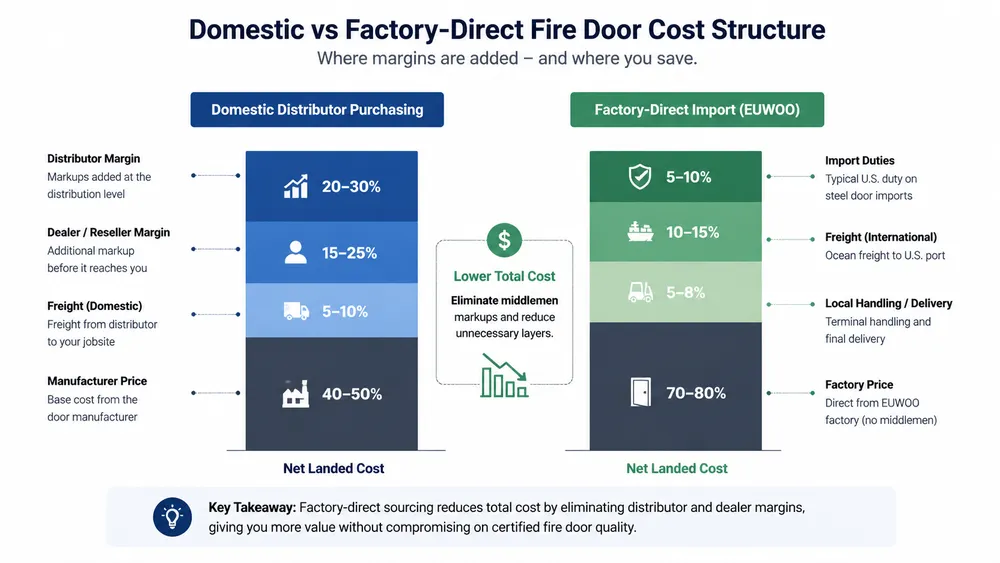
- Margin compression on repeat volume. If you're a distributor buying 500+ fire doors per year through another manufacturer's distribution chain, every layer between the factory floor and your warehouse is margin you're giving away. A domestic manufacturer sells to their distributor, who sells to you, who sells to your customer. Each step adds 15–25%.
- Limited private-label flexibility. Most US manufacturers sell under their own brand. If you want fire doors with your branding, your packaging, your documentation — that's not how their distribution model works.
- Customization bottlenecks. The large manufacturers optimize for standard configurations. Non-standard sizes, custom vision lite locations, unusual hardware preps, or specific finish requirements often trigger extended lead times and upcharges that erode your project budget.
- Capacity allocation. During peak construction seasons, the major manufacturers prioritize their largest accounts. If you're not a top-tier distributor, your 200-door order may sit in the queue behind a hospital system's 2,000-door spec.
None of this makes domestic suppliers bad — it makes them optimized for a specific buying pattern. If your buying pattern is different, the economics shift.
When Factory-Direct Sourcing Changes the Math
For importers, distributors building private-label programs, and contractors bidding large commercial projects, there's a sourcing model that most domestic supplier lists don't mention: buying fire doors directly from the manufacturing source.
Factory-direct sourcing means your purchase order goes to the facility that actually forms the steel, fills the core, applies the coating, and assembles the door. No distributor margin, no trading company markup, no brand licensing fee between you and the production floor.
The trade-offs are real and worth understanding clearly:
What you gain:
- Unit cost reduction of 30–50% on equivalent specifications — because you're buying at manufacturing cost plus factory margin, not retail distribution pricing. On a 500-door order, that difference funds your freight, duties, and warehousing and still leaves margin improvement.
- Full OEM/ODM capability — your brand, your specs, your packaging. The factory's engineering team works directly with you on door configuration, hardware prep, finish, and labeling. You own the product identity.
- Production capacity that doesn't compete with a domestic brand's own distribution — your order gets dedicated line time, not leftover capacity after the manufacturer fills their own channel.
- Direct QC communication — when you need to adjust a tolerance, change a hardware prep, or add a vision lite to a configuration, you're talking to the people running the press brake, not a sales rep relaying messages.
What you trade:
- Lead time extends to 30–45 days production plus 25–35 days ocean freight — so you're planning 8–12 weeks from order confirmation to warehouse arrival. This works for inventory stocking and planned projects; it doesn't work for emergency replacements.
- Container minimum quantities — a 40HQ container holds roughly 200–280 KD fire door sets depending on configuration. You need the volume and warehouse capacity to receive at that scale.
- Import logistics responsibility — customs clearance, duties, port handling, and inland freight are on your side of the transaction. If you've imported before, this is routine. If you haven't, there's a learning curve.
The decision isn't domestic vs. import — it's understanding which orders belong in which channel. Your rush replacements and small tenant improvements go through domestic quick-ship suppliers. Your annual stocking orders, large project bids, and private-label programs are where factory-direct sourcing earns its margin advantage.
EUWOO as a Factory-Direct Fire Door Source
We've been manufacturing fire doors at our facility in Luoyang, China since 2008. I'll be specific about what we offer because vague claims don't help you evaluate a sourcing partner.
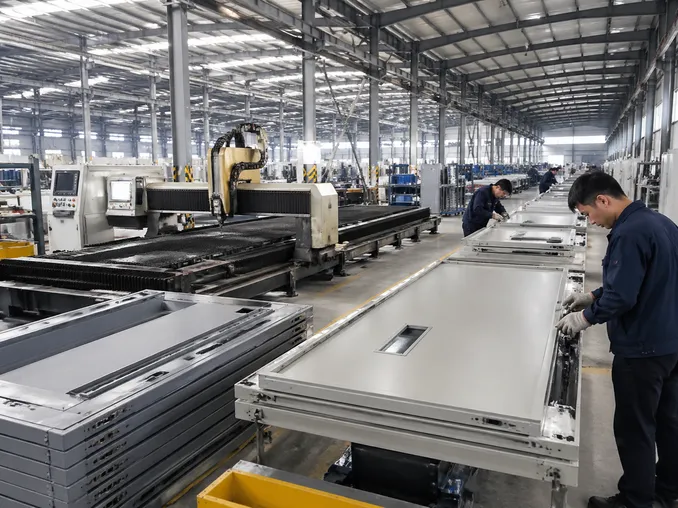
Facility and capacity. 18,000 m² of dedicated door manufacturing space, 6 production lines, 220 employees, 450,000-unit annual capacity. We don't share production lines with other product categories — your fire door order runs on lines built for door production. (For context, that capacity means a 1,000-unit fire door order is roughly two days of dedicated line time. We're not rearranging the floor to fit your job in.)
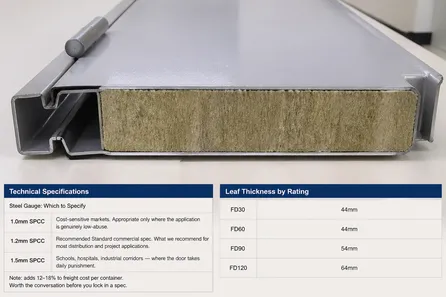
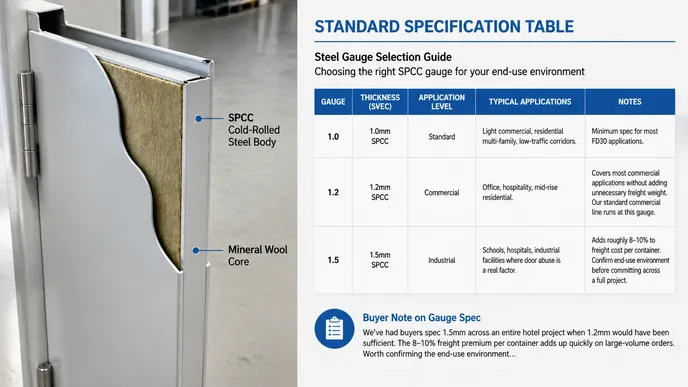
Fire door construction. Our standard commercial fire door uses 1.0–1.2mm SPCC cold-rolled steel body panels with mineral core fill, CNC laser-cut and press brake-formed to ±0.5mm dimensional tolerance. Frames are roll-formed from matching gauge steel with welded or KD assembly options. We produce single-leaf and double-leaf configurations in ratings from 45 minutes to 3 hours, with vision lite cutouts and glazing options available across the range.
Certification and compliance. We hold NFPA 80, ISO 9001:2015, CE, and SGS certifications. For US-market fire doors, NFPA 80 compliance is the critical standard, and we've maintained that certification since we entered the North American export market. Our fire door certification documentation includes test reports, product data sheets, and installation instructions formatted for US project files.
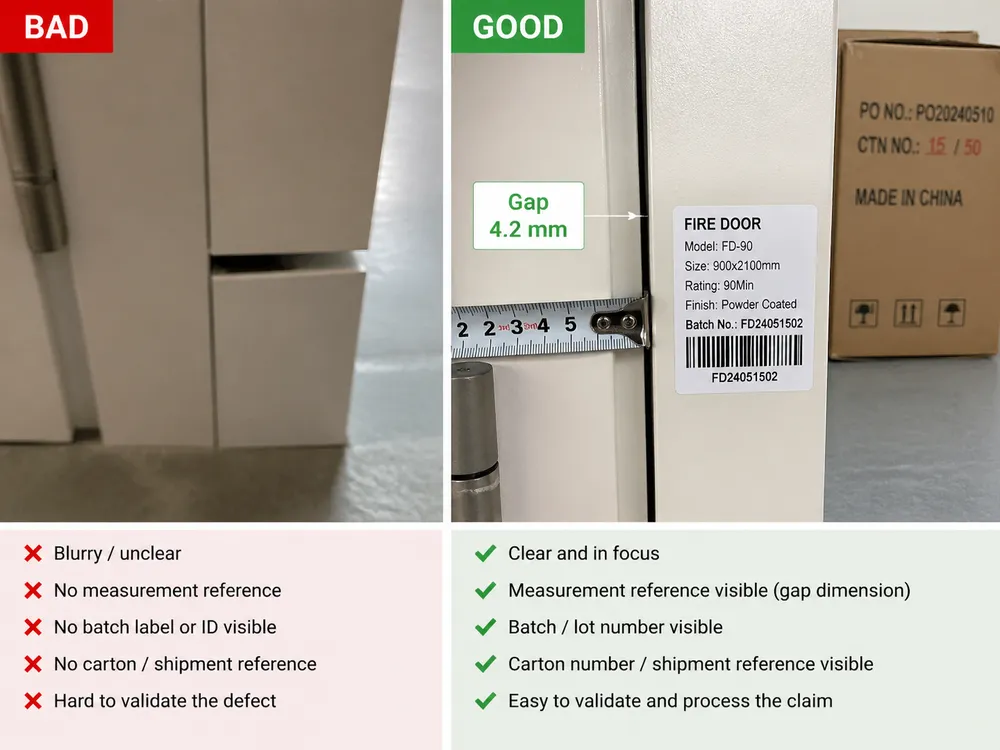
Quality control. Every fire door goes through our 5-stage inspection process: incoming steel verification, post-forming dimensional check, weld integrity inspection, coating adhesion and thickness measurement (60–80μm powder coat over zinc phosphate pretreatment), and 100% final assembly inspection before container loading. We don't do statistical sampling on outgoing product — every unit is inspected. Batch traceability links each door to its production date, line, material lot, and inspection record.
Customization and OEM/ODM capability. Our 15-engineer R&D team handles custom door configurations from spec review through 3D rendering, prototype, and production. Non-standard sizes, custom hardware preps, specific vision lite locations, branded packaging, and private-label documentation are standard service — not special-order exceptions. MOQ is 50 units for standard catalog fire doors, 100 units for custom configurations.
Finish options. The automated powder coating line runs 60+ colors with consistent film thickness across full production batches. We switched to zinc phosphate pretreatment in 2020 after seeing adhesion inconsistencies on coastal-market shipments — the current process passes 500-hour salt spray testing, which covers the corrosion resistance threshold for most US commercial installations.
Logistics. Fire doors ship in KD flat-pack format optimized for 40HQ container loading — approximately 200–280 door sets per container depending on configuration. Every carton carries a barcode linked to the production batch record for arrival-side traceability. Standard lead time is 25–35 days from deposit confirmation for catalog models. We've shipped to Los Angeles, Houston, and other US ports with complete documentation packages (commercial invoice, packing list, bill of lading, certificate of origin, test certificates) ready for customs clearance.
If you're evaluating whether factory-direct fire door sourcing fits your business model, the comparison isn't abstract — request a quote with your specifications and we'll send back a detailed cost breakdown you can compare against your current domestic pricing.
Fire Door RFQ Checklist — What to Include When You Request Quotes
Whether you're sending RFQs to domestic suppliers or evaluating a factory-direct source, a complete specification request saves weeks of back-and-forth. Here's what your fire door RFQ should cover:
- Fire rating: 20-min, 45-min, 60-min, 90-min, or 3-hour — and whether you need a temperature-rise rating
- Opening size: Width × height of the masonry or drywall opening, not the door leaf size
- Door leaf construction: Steel gauge (16-ga, 18-ga), core type (mineral, polystyrene, steel stiffened), edge type (beveled, square)
- Frame type: Welded, KD (knock-down), or drywall slip-on — and frame gauge
- Hardware prep: Hinge size and location, lock prep (cylindrical, mortise, exit device), closer reinforcement, coordinator prep for pairs
- Vision lite: Size, location, glazing fire rating, and frame kit specification
- Finish: Primer only, powder coat (specify color), or galvanized
- Quantity: Total door sets, broken down by configuration if multiple types
- Labeling requirements: UL, WHI, or other listing body; label placement preferences
- Packaging: KD flat-pack, pre-hung, or crated — and any palletizing requirements
- Destination: Job site address or port of entry (for import quotes, the destination port determines freight cost)
- Timeline: Required delivery date or project phase milestone
A complete RFQ gets you accurate quotes faster and makes supplier comparison meaningful. If you're comparing a domestic distributor quote against a factory-direct landed cost, make sure both quotes are based on the same specification — otherwise you're comparing different products, not different prices.
Matching the Supplier Model to Your Buying Pattern
The right fire door supplier depends on how you buy, not just what you buy.
You need doors for a single project on a tight schedule. Go domestic. Trudoor, HMX, or your regional distributor can get standard fire-rated doors to your job site in days, not months. The unit cost premium is the price of speed, and on a time-sensitive project, it's worth paying.
You're a contractor bidding multiple commercial projects per year. Build relationships with one or two domestic manufacturers (Republic, Mesker, or one of the ASSA ABLOY brands) for your standard specifications, and keep a quick-ship source for the inevitable rush orders. If your annual volume exceeds 300–500 doors, run a parallel quote from a fire door manufacturer with factory-direct pricing to see where the crossover point is.
You're a distributor or importer building a fire door product line. This is where factory-direct sourcing delivers the most value. You need consistent supply at a cost basis that leaves room for your margin, private-label flexibility so you're building your brand equity (not someone else's), and direct engineering access for custom configurations. Container-scale purchasing with 100% pre-shipment inspection and batch traceability gives you the quality control documentation your downstream customers expect.
You're bidding a large institutional or industrial project (500+ doors). At this volume, the unit cost difference between domestic distribution and factory-direct manufacturing is significant enough to cover freight, duties, warehousing, and still improve your bid margin. The lead time works if you're planning procurement against a construction schedule rather than reacting to field emergencies.
You need specialty fire doors (blast-rated, bullet-resistant, acoustic). Ambico or a similar specialty manufacturer is your primary source. Standard fire door suppliers — domestic or import — don't typically carry multi-threat rated products. Budget accordingly; specialty ratings carry specialty pricing.
The US fire door market gives you options across the full spectrum of speed, cost, customization, and volume. The suppliers in this guide cover that spectrum. Your job is matching the right supplier model to each purchasing scenario in your business — and most buyers who source fire doors regularly end up using more than one channel.