

Industrial Commercial Doors Built for Real Abuse
Heavy-gauge industrial commercial doors — forklift-impact-resistant frames, built for the abuse profile of real industrial environments. 1.5mm+ body steel, reinforced frame corners, 4-bearing hinges rated for high-cycle operation — the spec decisions that keep your downstream customers from calling back with complaints.

What Makes an Industrial Door Different from a Standard Commercial Door
The category page covers our full commercial door range — this page is about the specific engineering decisions that separate industrial-grade construction from standard commercial spec.
Standard Commercial Spec (ANSI/SDI A250.8)
Standard commercial doors are built around the ANSI/SDI A250.8 hollow metal framework: 0.8–1.2mm body gauge, designed for office buildings, schools, and institutional corridors. That spec is correct for those environments.
Industrial Environments: A Different Problem
A manufacturing plant door sees forklift traffic, thermal cycling from process heat, chemical exposure from cleaning agents, and cycle counts that would destroy a standard commercial door in under two years.

Why the Frame Matters More Than the Leaf
The frame is the part that matters most in industrial applications — the door leaf can be replaced if it gets hit hard enough, but a distorted frame means a reframe job, which is expensive and disruptive. We run our industrial frames heavier than the leaf for exactly this reason.
Our Industrial Spec Decisions
1.5mm Body Gauge
Minimum on the door leaf. 2.0mm available for correctional, blast-adjacent, or high-vehicle-impact applications.
2.0mm Frame Steel
Heavier than the leaf by design. Welded corner gussets — not mechanical fasteners — carry the structural load at the most vulnerable points.
4-Bearing Hinges
89mm × 89mm minimum leaf size, rated for high-cycle operation. Continuous hinge prep available for maximum load distribution.
Reinforced Hardware Prep
Mortise lock pockets are reinforced with a steel strike plate backing plate as standard — not relying on frame steel alone to carry the locking load.
The Commercial Value: Zero Callbacks
The result is a door that your downstream customers — plant managers, facility operators, logistics directors — don't have to think about after installation. That's the commercial value: zero callbacks, zero warranty claims, and a product you can sell at a margin that reflects the engineering rather than competing on price with standard commercial spec.
Technical Specifications
These are industry-standard values for this product type. Actual specifications may vary by configuration — contact us for detailed product data sheets.
| Parameter | Industrial Commercial Door Spec |
|---|---|
| Body material | Cold-rolled SPCC steel, 1.5mm standard (1.2mm and 2.0mm available) |
| Frame material | Cold-rolled steel, 2.0mm minimum |
| Door thickness | 50mm standard; 60mm available for thermal/acoustic applications |
| Standard leaf sizes | W900–1200mm × H2100–2400mm (single leaf); W1800–2400mm (double leaf) |
| Custom sizing | Available on runs ≥100 units; oversized openings up to W1500mm single leaf |
| Core fill | Mineral wool standard (fire resistance + acoustic); polyurethane foam available for thermal applications |
| Surface finish | Powder coat, 60–80μm, electrostatic application; 500-hour salt spray standard; 1000-hour available |
| Hinges | 4-bearing, 89mm × 89mm minimum leaf; continuous hinge prep available |
| Hardware prep | ANSI, EN, AS/NZS; reinforced mortise lock pocket with steel backing plate |
| Frame corner construction | Welded gussets (not mechanical fasteners) |
| Fire rating | FD60 / FD90 available on mineral wool core configurations |
| Certifications |
ISO 9001:2015 CE SGS NFPA 80
|
| MOQ | 50 units (standard configurations) / 100 units (custom) |

Recommended Standard Spec
The 1.5mm body / 2.0mm frame combination is our standard industrial spec — it's what we'd recommend for most manufacturing and logistics applications.
OEM / ODM Available
Custom configurations, private label, and OEM/ODM programs available. Minimum run requirements apply — contact us to discuss your program requirements.
Where Industrial Commercial Doors Sell
Industrial commercial doors aren't a commodity segment — the buyers who need them know exactly what they need, and they're willing to pay for the right spec. Here's where our existing distributor and contractor network moves volume, and what makes each segment commercially interesting.
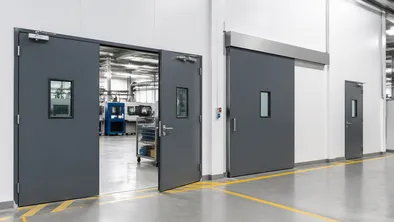
Manufacturing Plants & Processing Facilities
A mid-size manufacturing facility typically has 20–80 door openings across production floors, loading areas, utility rooms, and office-to-floor transitions. Plant expansions and new facility builds generate initial orders of 50–200 units; ongoing replacement and maintenance orders follow on 3–5 year cycles as doors in high-abuse zones wear out.
The spec requirement is consistent: heavy gauge, impact resistance, and compliance with local fire codes for plant room and electrical room openings. Our FD60/FD90 capability on the industrial line means you can cover both standard and fire-rated openings from a single supplier relationship.
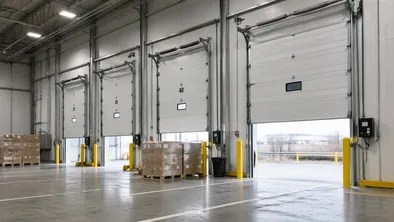
Logistics & Distribution Centers
A large distribution center can have 100–300 door openings, and the cycle counts in active pick-and-pack areas are brutal — 300–500 open-close cycles per day on high-traffic doors. The failure mode that generates the most complaints in this segment is hinge wear leading to door sag and frame binding.
Our 4-bearing hinge spec and continuous hinge option address this directly. Distributors serving the logistics construction sector find that the industrial door line generates reliable reorder business as facilities expand and replace worn units — it's not a one-time project sale.
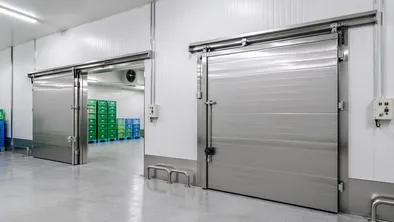
Cold Storage & Food Processing
Specific requirements that standard industrial doors don't always meet: thermal performance to prevent condensation and energy loss, surface treatments that withstand aggressive cleaning chemicals, and in food processing environments, compliance with hygiene standards that preclude certain coating types.
Our polyurethane foam core option brings the door's thermal performance to approximately U-1.6 W/m²K on a 60mm door — adequate for most cold storage anteroom applications. For food processing environments, we offer a galvanized steel finish option that withstands the alkaline cleaning agents used in HACCP-compliant facilities.
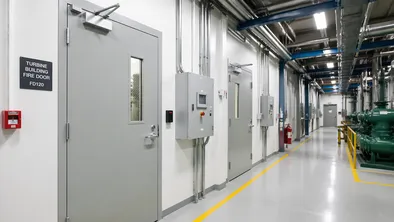
Infrastructure & Utilities
Power plants, water treatment facilities, and telecommunications buildings specify industrial commercial doors for plant rooms, control rooms, and equipment access points. These projects often require FD90 or FD120 fire ratings and specific hardware configurations for access control integration.
Order volumes per project are typically smaller (20–60 units) but the specification requirements are exacting and the margin profile reflects that. Our NFPA 80 certification and fire-rated line capability are the entry tickets for this segment.
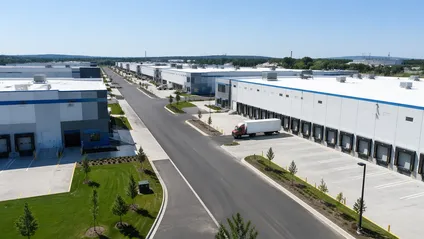
Industrial Park & Warehouse Development
Developers building speculative industrial parks and warehouse complexes need consistent supply of industrial-grade doors across multiple buildings and phases. A 10-building industrial park development can represent 400–800 door openings.
The commercial opportunity for your distribution business is in becoming the preferred supplier for a developer or general contractor who builds repeatedly in your market — one relationship, predictable volume, and the ability to consolidate SKUs across a project.
(manufacturing)
(logistics high-traffic)
(60mm foam core)
(warehouse development)
How We Engineer Against the Failure Modes That Generate Warranty Claims
Industrial door buyers have usually been burned before. Here's what actually fails in industrial environments, and the specific production decisions we make to prevent each failure mode.
Forklift and Cart Impact
Most Common Failure ModeDamage almost always concentrates at the bottom rail and lower frame corners — the zones that take glancing hits from pallet jacks and forklifts. We reinforce the bottom rail with a 3mm steel channel insert and weld the lower frame corners with full-penetration welds rather than the tack welds standard on commercial-grade construction.
The result is a door that absorbs impact and springs back rather than deforming permanently. A door that deforms on first impact becomes a recurring maintenance problem; a door that survives impact becomes invisible — which is what your downstream customer actually wants.

Powder Coat Failure in Industrial Environments
Edge and Corner DelaminationIndustrial environments combine mechanical abrasion, chemical exposure from cleaning agents and process fluids, and thermal cycling from nearby process equipment. The failure mode is typically coating delamination starting at edges and corners, not at weld seams.
The zinc primer adds a sacrificial corrosion barrier that extends coating life significantly in chemically aggressive environments. We also radius all exposed edges to a minimum 2mm before coating — sharp edges are where thin powder coat coverage concentrates and where delamination starts.
Frame Distortion from Thermal Cycling
Foundries · Bakeries · Laundries · Chemical PlantsA failure mode specific to industrial environments near process heat sources. Steel expands and contracts with temperature, and a frame that's welded rigid without accounting for thermal movement will develop stress cracks at corner welds over time.
We design our industrial frames with controlled expansion joints at the head corners on applications where the buyer specifies proximity to heat sources — it's a detail that adds a small amount of production complexity but eliminates a failure mode that's nearly impossible to fix after installation.
Seal Degradation Under Industrial Conditions
Dual-Seal ConfigurationIndustrial environments have higher particulate levels, more aggressive cleaning regimes, and wider temperature swings — all of which accelerate EPDM seal wear. We use a dual-seal configuration on our industrial line:
- Primary compression seal — handles air and dust infiltration
- Secondary wiper seal at the threshold — handles the particulate load
The threshold seal is replaceable without removing the door — a detail that matters when your downstream customer's maintenance team needs to service the door without a specialist.
Customization: What We Can Configure and What the Limits Are
Industrial commercial doors have more customization demand than most product lines — every facility has specific opening sizes, hardware requirements, and finish specifications. Here's what's genuinely configurable and where the practical limits are.
Opening Size and Door Dimensions
Non-standard dimensions — oversized widths for equipment access, reduced heights for mezzanine levels, unusual aspect ratios for retrofit applications — are handled on our press brake and roll-forming lines.
100+ units: No tooling surcharge for non-standard dimensions. Below 100 units, we'll discuss the economics before quoting — it's usually still viable, but the per-unit cost impact is real.
Hardware Prep and Access Control Integration
We prep to ANSI, EN, and AS/NZS hardware standards as standard. For industrial applications with access control requirements, we can pre-wire conduit runs through the door frame and pre-cut cutouts for reader mounting.
- Card readers and electric strikes
- Electromagnetic locks
- Panic hardware
- Pre-hung complete assemblies available
Send us the hardware spec for your facility's access control ecosystem and we'll prep accordingly.
Surface Finish for Specific Chemical Environments
Stainless body panels on a standard steel frame is a cost-effective middle ground for food processing applications where the door surface needs to be cleanable to HACCP standards but the frame is protected by the wall opening.
Fire Rating Configuration
FD60 · FD90 · FD120FD120 requires a thicker door assembly (typically 60mm) and specific hardware that's certified for the rating. If your project requires FD120, send us the project spec and we'll confirm the configuration and certification documentation.
Branding and OEM Labeling
Private-Label ProgramsPrivate-label programs are available for distributors who want to run our industrial doors under their own brand. Most of our North American and Australian distributor partners run our doors under their own brand — it's a standard part of how we work.
- Custom packaging
- Brand plates
- Private-label documentation
Match any RAL color on runs of 100+ units. For facilities using color coding for safety or zone identification, we can supply multiple colors within a single order at no MOQ premium per color — as long as the total order meets the 100-unit threshold.
Send Us Your Project Specs for a Custom Quote
Non-standard dimensions, specific access control ecosystems, chemical-resistant finishes, FD120 fire ratings, or private-label programs — send us the spec and we'll confirm the configuration, lead time, and pricing before you commit.
Certifications and Compliance for Industrial Applications
The certifications our industrial commercial doors carry — ISO 9001:2015, CE, SGS, NFPA 80 — cover the compliance requirements for most of our export markets. Here's what each one means for your specific sourcing situation.
ISO 9001:2015
Covers our manufacturing quality management system — the process certification that tells your procurement team our production is audited and documented. For buyers who need to qualify us as a vendor, ISO 9001 is typically the baseline requirement.
CE Marking
The entry requirement for the European market, recognized in many markets that follow European standards. For industrial commercial doors going into EU construction projects, CE marking on the door assembly is a regulatory requirement, not just a preference.
SGS Certification
Provides third-party product testing and inspection. SGS audit reports are available on request and are useful for buyers who need independent verification beyond our own QC documentation.
NFPA 80
Covers fire door assembly standards for the North American market. For industrial applications in the US and Canada where fire-rated door assemblies are required — plant rooms, electrical rooms, stairwells — NFPA 80 compliance is the baseline. For UL listing on specific fire-rated configurations, ask us for current listing documentation.
Market-Specific Compliance Beyond These Certifications
For markets with specific compliance requirements beyond these certifications — Australian NCC compliance, Gulf Cooperation Council standards, Southeast Asian national building codes — we can provide technical documentation to support your local compliance process.
The door construction and performance data is available; the local certification pathway depends on your market's regulatory structure.
Learn About Our Manufacturing & Certification CapabilitiesPackaging, Container Loading, and Export Logistics
Industrial commercial doors are heavier and bulkier than standard commercial doors — the logistics math is different, and it affects your landed cost calculation.

Container Loading Density
A standard 40HQ container loads approximately 280–380 industrial commercial doors in flat-pack KD configuration, depending on door thickness (50mm vs 60mm) and whether frames are included.
Compare this to 400–600 units for standard commercial doors — the heavier gauge and thicker assembly reduce loading density by roughly 25–30%. Factor this into your landed cost model before comparing unit prices with lighter-spec competitors.
Pre-Hung Assemblies: The Trade-Off
Pre-hung assemblies (door + frame + hardware) reduce container loading density by a further 30–35% but eliminate on-site assembly labor for your downstream customers.
For industrial facility projects where installation labor is expensive or where the installation contractor isn't specialized in door hanging, pre-hung assemblies can be the right commercial decision even at the higher freight cost per unit.
Packaging Engineering
Each door ships in a corrugated carton with foam corner protection, edge guards on all four corners, and a stretch-wrap outer layer.
For markets with rough port handling — West Africa, some Southeast Asian ports — we add a wooden pallet base and additional corner reinforcement. Industrial doors are heavy enough that improper handling during port transfer can cause frame distortion; our packaging is engineered to prevent this.
300+ Unit Orders: Container Loading Plan
For orders of 300+ units, we provide a container loading plan with exact CBM calculations before you confirm the order. Send us your destination port and we'll include a freight estimate from our regular forwarders — useful for landed cost modeling before you commit.
Packaging Specification by Destination
| Destination / Condition | Packaging Spec | Notes |
|---|---|---|
| Standard export markets | Corrugated carton + foam corners + edge guards + stretch wrap | Baseline for all shipments |
| West Africa / rough-handling ports | Above + wooden pallet base + additional corner reinforcement | Prevents frame distortion at port transfer |
| Southeast Asia (select ports) | Above + wooden pallet base + additional corner reinforcement | Applied based on port handling assessment |
| Orders 300+ units | Full container loading plan + CBM calculations + freight estimate | Provided before order confirmation |
Frequently Asked Questions
Spec decisions, configuration options, and sourcing logistics — answered directly.
Q What steel gauge should I specify for industrial commercial doors in a manufacturing plant?
For standard manufacturing plant applications — production floor access, utility room doors, office-to-floor transitions — specify 1.5mm body gauge with a 2.0mm frame. This is our standard industrial spec and handles the typical abuse profile of a manufacturing environment.
For applications with direct vehicle impact risk (loading dock doors, forklift staging areas), move to 2.0mm body with a reinforced bottom rail.
For correctional facilities or blast-adjacent environments, ask us about the 2.0mm body option with additional frame reinforcement — it's a different product configuration and we'll quote it separately.
Q What is the difference between industrial commercial doors and heavy-duty commercial doors?
Industrial Commercial Doors
Engineered specifically for manufacturing, processing, and logistics environments. Spec decisions — 1.5mm+ body gauge, 2.0mm frame, welded corner gussets, 4-bearing hinges, chemical-resistant finish options — are driven by the abuse profile of industrial facilities.
Right for: manufacturing plants, processing facilities.
Heavy-Duty Commercial Doors
Built for high-traffic and high-abuse environments in institutional and commercial settings — correctional facilities, logistics hubs, high-traffic corridors — where the primary concern is cycle durability and impact resistance rather than chemical exposure or thermal cycling.
Right for: high-traffic institutional buildings.
If your application is a manufacturing plant or processing facility, industrial commercial doors are the right spec. If your application is a high-traffic institutional building, heavy-duty commercial doors may be the better fit.
Q Can industrial commercial doors be fire-rated?
Yes. FD60 and FD90 ratings are available on mineral wool core configurations. FD120 is available on request with a 60mm door assembly and certified hardware.
FD60
Standard — mineral wool core
FD90
Standard — mineral wool core
FD120
On request — 60mm assembly
Important: The fire rating applies to the complete assembly — door leaf, frame, hardware, and seals — not just the door leaf. If your project requires a specific fire rating, send us the project spec and we'll confirm the configuration and provide the relevant certification documentation.
Q What surface finish is best for industrial doors in food processing or chemical environments?
Food Processing (HACCP)
- Hot-dip galvanized finish — handles alkaline cleaning agents
- 304 stainless steel body panels
- Standard powder coat — not recommended for regular strong alkaline or acidic cleaning agent exposure
Chemical Plant Applications
The right finish depends on the specific chemicals involved. Send us the chemical exposure profile and we'll recommend the appropriate surface treatment.
Standard powder coat will degrade faster than the warranty period in environments with regular exposure to strong alkaline or acidic cleaning agents.
Q What is the MOQ for custom-sized industrial commercial doors?
100 units
Custom configurations
Non-standard dimensions, custom colors, custom hardware prep
50 units
Standard catalog configurations
Standard dimensions, standard colors, standard hardware prep
Below 100 units on custom sizes, we can still quote — but the per-unit cost impact of the press brake setup is real and we'll be upfront about it before you decide.
For project orders where the custom size is driven by a specific facility's opening dimensions, we can often consolidate multiple opening sizes into a single order to reach the 100-unit threshold.
Q How do I specify industrial commercial doors for access control integration?
Send us the access control hardware spec — manufacturer, model, and mounting requirements for the reader, electric strike or magnetic lock, and any door position switch. We'll pre-cut the cutouts, pre-wire conduit runs through the frame, and prep the door for the specific hardware.
Pre-cut cutouts
Reader, strike, and switch positions factory-cut to spec
Pre-wired conduit
Conduit runs through the frame, factory-installed
Hardware-ready prep
Included in standard custom configuration service
This is significantly cleaner than field-modifying a door after installation. If you're not sure which access control hardware your downstream customer will use, we can prep for the most common configurations in your market and leave the final hardware installation to the site team.
Start Your Industrial Door Sourcing Conversation
The most useful first step for industrial door sourcing is usually a technical conversation before a quote — the right configuration depends on your specific application, and getting the spec wrong in either direction costs more than the conversation.
Why Spec Accuracy Matters
Over-spec wastes margin. Under-spec generates warranty claims. Both cost more than a pre-quote technical conversation.
What to Send Us
- Your facility type — manufacturing plant, logistics hub, processing facility, cold storage, etc.
- The opening sizes you're working with
- Any specific compliance requirements — fire rating, access control, chemical resistance
- Your rough volume — sample order or production run
Our engineering team will recommend the exact configuration and send back a detailed quote with CAD drawings within 3 business days.
New to Sourcing from China?
Most buyers in this segment start with a sample order of 2–4 units to test against their project spec or show their downstream customers before committing volume.
We can ship samples on the same lead time as a production order — there's no separate sample program with extended lead times.

Contact Our Sales Team
Reach us directly by email or WhatsApp. We respond to all technical inquiries within one business day.