

Commercial Specialty Door | EUWOO
Purpose-built commercial specialty doors for applications where standard configurations don't qualify.
From blast-resistant access panels to cleanroom-rated pass-through doors, we engineer to your project spec — not the other way around. OEM/ODM with 3D rendering included.

What "Specialty" Actually Means at the Sourcing Level
Most commercial door categories have a clear spec sheet: gauge, fire rating, hardware prep. Commercial specialty doors are different — the defining characteristic is that the application drives the specification, not the other way around.
A standard hollow metal door won't pass a cleanroom pressure differential. A standard fire door won't meet blast overpressure requirements. A standard acoustic door won't hit STC 45 without specific core construction and perimeter sealing.
We've been manufacturing specialty commercial doors since 2008, and the pattern we see consistently is this: buyers come to us after a standard supplier has already failed them — either the product didn't meet the project spec, or the supplier couldn't produce documentation to prove it did.
Our position in this category is straightforward. We build to the performance requirement first, then engineer the door around it. That means we need your spec before we quote, not after.

Technical Specifications by Configuration
Because specialty doors are application-driven, we present specs by configuration rather than a single table. These are industry-standard parameters — contact us for exact values based on your project requirements.
Acoustic / Sound-Rated Doors
STC 35 · 42 · 45 · 50 — Recording studios, conference rooms, server rooms, medical facilities
| Parameter | Standard Value | Notes |
|---|---|---|
| STC Rating | STC 35 / 42 / 45 / 50 | Higher ratings require perimeter seal upgrade |
| Door Body Thickness | 55mm / 65mm / 80mm | Increases with STC target |
| Core Construction | Mineral wool + mass-loaded vinyl composite | Dual-layer for STC 45+ |
| Frame Seal | Automatic drop seal + compression perimeter gasket | Critical — most acoustic failures are at the frame, not the panel |
| Steel Face Gauge | 1.2mm SPCC cold-rolled | Standard; 1.5mm available for high-abuse environments |
| Typical Applications | Recording studios, conference rooms, server rooms, medical facilities | |
Buyer note: We've found that buyers spec STC 42 when they actually need STC 45 — the difference is the drop seal. If your downstream customer is in healthcare or broadcast, push to 45 minimum.
Cleanroom / Controlled-Environment Doors
ISO Class 5–8 compatible · Pharmaceutical, semiconductor, food processing
| Parameter | Standard Value | Notes |
|---|---|---|
| Pressure Differential Rating | Up to ±50 Pa | Higher available on request |
| Surface Finish | Electrostatic powder coat, 60–80μm, coved corners | No exposed fasteners on room-side face |
| Seal Type | Full-perimeter EPDM compression seal | Replaceable without door removal |
| Vision Panel | Flush-mounted, double-glazed, no frame protrusion | ISO Class 5–8 compatible configurations |
| Hardware | Stainless steel lever, concealed hinges | Minimizes particle trap points |
| Steel Specification | 1.2mm SPCC, phosphate pre-treatment | Prevents corrosion under coating in humid environments |
Blast-Resistant / Forced-Entry-Resistant Doors
GSA/ISC Level II–IV · Government, critical infrastructure, embassies
| Parameter | Standard Value | Notes |
|---|---|---|
| Blast Rating | GSA/ISC Level II–IV (design-specific) | Requires project-specific engineering |
| Steel Body | 3mm+ structural steel plate | Varies by blast level |
| Frame Anchoring | Embedded steel frame, 4-point anchor minimum | Frame failure is the primary blast failure mode |
| Locking | Multi-point deadbolt, 25mm throw minimum | |
| Hinge Specification | Full-length piano hinge or 3× heavy-duty weld-on | |
| Lead Time | 45–60 days | Engineering review required before production |
Lead-Lined Radiation-Shielding Doors
1.0–2.5mm Pb equivalent · Radiology, nuclear medicine, radiotherapy suites
| Parameter | Standard Value | Notes |
|---|---|---|
| Lead Lining | 1.0mm / 1.5mm / 2.0mm / 2.5mm Pb equivalent | Specified by medical physicist |
| Door Weight | 80–180kg depending on Pb spec | Frame and hardware must be rated accordingly |
| Frame Overlap | 50mm minimum lead overlap at frame rebate | Eliminates radiation bypass at perimeter |
| Viewing Window | Lead glass, Pb equivalent matched to door spec | |
| Certifications | Designed to NCRP 151 / DIN 6844 guidelines | Test reports available on request |
Oversized / Non-Standard Dimension Doors
Up to 2,400mm wide · 3,600mm tall · Custom cutouts per drawing
| Parameter | Standard Range | Notes |
|---|---|---|
| Width | Up to 2,400mm single leaf | Double-leaf available for wider openings |
| Height | Up to 3,600mm | Reinforced internal frame required above 2,800mm |
| Custom Cutouts | Vision panels, pass-through windows, louvre vents | Positioned per drawing |
| MOQ | 10 units for custom dimensions | Lower than most specialty suppliers |
Specifications shown are industry-standard values for this product type. Actual specifications vary by project. Contact us for detailed engineering review and product data sheets.
We review specifications before quoting — not after. Share your requirements and we'll confirm feasibility and lead time.
Market Segments Where This Product Generates Repeatable Orders
Specialty doors aren't a one-time project item for the right distribution channels — they're a recurring revenue stream. Here's where we see our buyers building consistent volume.
Healthcare Construction & Fit-Out
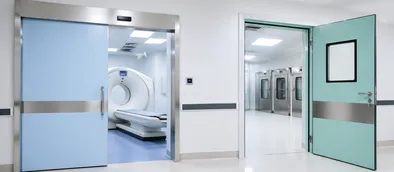
The highest-volume segment for lead-lined and cleanroom doors. A single hospital project typically requires 15–40 specialty doors across radiology, operating theaters, and sterile processing. Contractors who establish a reliable specialty door supplier early in a project cycle reorder on every subsequent hospital bid.
Hospital construction pipelines in the Middle East and Southeast Asia are running 3–5 years deep. This segment has grown significantly over the past three years — worth building into your product line if you're targeting healthcare GCs.
Government & Embassy Facility Contractors
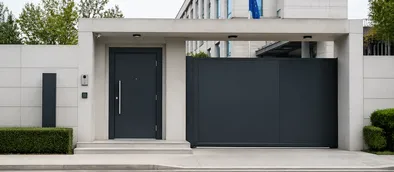
GSA-compliant facilities, embassy compounds, and critical infrastructure projects specify blast ratings that eliminate most standard door suppliers from consideration. Buyers who can quote blast-rated doors with proper documentation — ISC compliance letters, engineering calculations — win bids that competitors can't even enter.
Low MOQs but high margins. Repeat business follows the contractor across projects.
Pharmaceutical & Semiconductor Facility Developers
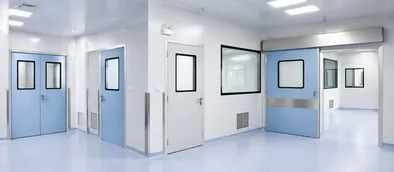
A single greenfield pharma manufacturing facility might require 80–150 cleanroom-rated doors across ISO Class 5–8 zones. The spec is tight, the documentation requirement is real (material certifications, surface finish reports), and the buyer is typically a specialist fit-out contractor who works exclusively in controlled environments.
Once you're on their approved vendor list, you stay there.
Broadcast, Recording & Performing Arts Contractors
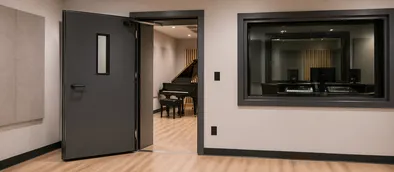
STC 45–50 doors for recording studios and broadcast booths command significant premiums over standard commercial doors. The contractor base is specialized enough that word-of-mouth referrals drive most new business. A distributor who stocks or can quickly source STC 45 acoustic doors has a meaningful advantage in this niche.
Smaller segment volume, but high-margin and referral-driven.
Industrial & Utility Facility Operators
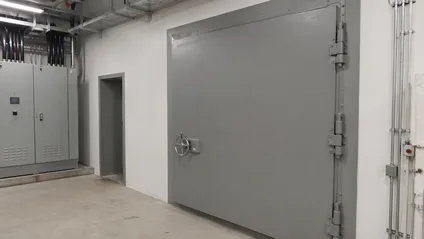
Power plants, data centers, and substations need oversized access doors and blast-resistant equipment room doors. These are often direct procurement relationships rather than contractor-mediated, and the buyer is typically a facilities engineer with a specific performance requirement and a budget to match it.
Direct relationships mean shorter sales cycles and cleaner repeat order patterns once you're an approved supplier.
Customization Parameters and What They Mean for Your Order
Specialty doors are, by definition, custom. But "custom" means different things at different stages of an order, and understanding the boundaries upfront saves time on both sides.
Configured Per Project — No MOQ Impact
Drawing-level changes that don't affect tooling
- Door dimensions within our standard range
- Hardware prep — hinge locations, lock prep, closer prep
- Surface finish color from our 60+ RAL options
- Vision panel size and position
- Swing direction
Requires Minimum Run Quantities
Typically 10 units minimum — lower than most specialty manufacturers
- Core construction changes — e.g., switching from mineral wool to lead lining
- Non-standard steel gauges outside regular stock
- Custom frame profiles
We run smaller batch sizes on our production lines by design — which is why our MOQ is lower than most specialty manufacturers for these changes.
What We Need From You to Quote Accurately
STC rating, blast level, Pb equivalent, pressure differential — whatever the application requires
Exact rough opening measurements for each door location in the project
If you have one — we can work from a partial schedule or advise on hardware selection
Target market's applicable code or standard — we'll confirm compliance in the quote
We'll send back a detailed quote with CAD drawings within 5 business days.
For blast-resistant and radiation-shielding doors, we'll also include an engineering review summary.
OEM / ODM — Build Your Own Branded Product Line
We produce under your brand with your packaging. For distributors building a specialty door product line, we can develop a branded catalog with your SKU structure — we've done this for distributors in North America and the Middle East.
- Free 3D rendering included on orders over 50 units
- Branded catalog development with your SKU structure
- Your packaging and brand identity throughout

Production Process: Why Specialty Doors Require a Different Manufacturing Approach
Standard commercial doors run on high-volume automated lines — consistent geometry, predictable material flow, minimal engineering per unit. Specialty doors don't work that way, and suppliers who try to force them through standard production lines produce inconsistent results.
Separate Workflow, Not a Side Process
We run specialty door production as a separate workflow from our standard commercial door lines. Each specialty order goes through an engineering review before it enters production — we check that the specified construction will actually achieve the stated performance, not just that it matches the drawing.
Engineering Review Catches Specification Errors
We've caught specification errors this way that would have resulted in failed field tests:
- A lead-lined door spec'd at 1.5mm Pb that needed 2.0mm for the stated kVp rating
- An acoustic door with the correct core but an unsealed frame detail that would have dropped the STC by 6 points
Material Sourcing and Substitution Policy
The steel we use for specialty doors is sourced from the same approved mills as our standard line — SPCC cold-rolled for acoustic and cleanroom applications, structural plate for blast-resistant work. For lead-lined doors, we use sheet lead from certified suppliers with material test reports included in the shipment documentation.
No mid-production substitutions. If a material is out of stock, we hold the order and notify you rather than running with an alternative.

5-Stage QC Inspection
-
1
Incoming Material Verification
Mill certifications and material test reports checked against order spec before production begins.
-
2
In-Process Dimensional Check at Frame Assembly
Tolerances verified against approved drawing before core installation.
-
3
Core Installation Verification
Weight check for lead-lined doors; density check for acoustic mineral wool cores.
-
4
Final Assembly Inspection
Full check against the approved drawing — hardware, seals, finish, and labeling.
-
5
Pre-Shipment Performance Test
Acoustic doors: basic transmission loss check on a sample unit. Cleanroom doors: seal compression and UV surface finish inspection before batch ships.
Certifications and Compliance Documentation
The certifications we hold — ISO 9001:2015, CE, SGS, NFPA 80 — cover our standard commercial door production and quality management system. For specialty door applications, the compliance picture is more specific.
NFPA 80
Fire-RatedFire Door Standard
Applies to fire-rated specialty doors where fire resistance is a combined requirement — for example, a fire-rated acoustic door or a fire-rated cleanroom door. We can produce doors designed to NFPA 80 requirements with the appropriate core and hardware configuration.
CE Marking
CEEuropean Conformity
Covers our standard commercial door range and applies to specialty doors produced to EN standards. For buyers supplying European projects, we can provide CE Declaration of Conformity with the relevant harmonized standard reference.
Radiation-Shielding Doors
NCRP 151 DIN 6844Medical / Radiation Facilities
We produce to NCRP 151 and DIN 6844 design guidelines. We are not a testing laboratory — the shielding calculation is the responsibility of the project's medical physicist. We manufacture to the specified Pb equivalent and provide material test reports confirming lead content and thickness.
Third-party verification: Test reports from an accredited lab are available on request for projects that require independent verification.
Blast-Resistant Doors
GSA/ISCGovernment / Security Facilities
We produce to GSA/ISC performance specifications. Project-specific engineering calculations are available for orders requiring documentation packages.
SGS Factory Audit Reports
SGS audit reports are available on request for buyers whose procurement process requires third-party factory verification. Contact us with your project details and we'll provide the relevant documentation package.
ISO 9001
:2015
CE
EN Standards
SGS
Factory Audit
NFPA 80
Fire-Rated
Container Loading and Logistics for Specialty Door Orders
Specialty doors are heavier and often larger than standard commercial doors, which affects container economics in ways worth planning for upfront.
Standard Acoustic Doors
55–65mm · STC 35–42Load at approximately 80–100 units per 40HQ container, depending on frame configuration. Volume is the limiting factor at this weight class.
Frame configuration affects stacking density. We flag the optimal arrangement in your quote.
Lead-Lined Doors
2.0mm Pb EquivalentRun 25–35 units per 40HQ container due to weight. A full container of lead-lined doors will approach the container's weight limit before its volume limit.
We flag this in your quote and recommend the optimal container configuration to avoid overweight penalties.
Standard Packing Specification
- Custom wooden crates with foam corner protection and moisture barrier wrap on all units
- Lead-lined doors: packing list with individual unit weights for customs documentation
- Cleanroom doors: protective film on room-side face, stays on until installation
Export Markets Served
For markets with specific import documentation requirements — material certifications, test reports, country-of-origin declarations — we prepare the full documentation package as standard. No chasing paperwork after the container ships.
Documentation Prepared as Standard
Material certifications, test reports, and country-of-origin declarations are included in the standard export package — not available on request after shipment. Specify any market-specific requirements at the time of order.
Frequently Asked Questions
Decision-support answers for procurement teams, project managers, and specifiers sourcing commercial specialty doors.
What is the minimum order quantity for custom commercial specialty doors?
For standard specialty configurations (acoustic, cleanroom, oversized dimensions), our MOQ is 10 units.
For blast-resistant and lead-lined doors, which require project-specific engineering, we work on a per-project basis with no formal MOQ — a single-unit order for a critical application is something we'll quote.
For OEM/ODM with branded packaging, the minimum is 50 units.
What steel gauge should I specify for a commercial acoustic door targeting STC 45?
The steel face gauge matters less than most buyers expect for acoustic performance — the core construction and perimeter sealing are the dominant variables. We run 1.2mm SPCC as standard for acoustic doors.
Going to 1.5mm adds mass (which helps at low frequencies) but adds roughly 8–10kg per door and increases freight cost.
For STC 45, the more important spec is the automatic drop seal at the bottom and a compression gasket with consistent 3–4mm compression around the full perimeter. A 1.0mm door with proper sealing will outperform a 1.5mm door with a brush seal.
How do I specify the correct lead thickness for a radiation-shielding door?
Lead thickness is determined by the medical physicist on the project, based on the radiation source (kVp for X-ray, isotope for nuclear medicine), workload, occupancy factor of the adjacent space, and the applicable standard (NCRP 151 in North America, DIN 6844 in Europe).
We manufacture to whatever Pb equivalent is specified — 1.0mm, 1.5mm, 2.0mm, 2.5mm, or higher. What we need from you is the Pb equivalent in millimeters and the door dimensions.
We do not perform shielding calculations; that's the physicist's scope.
What documentation comes with a specialty door order for a regulated facility?
Standard documentation package:
- Commercial invoice and packing list with individual unit weights
- Certificate of origin
- Material test reports for steel and (where applicable) lead sheet
- Surface finish report (powder coat thickness and adhesion test results)
- ISO 9001:2015 quality certificate
- CE Declaration of Conformity (for CE-marked products)
- Engineering review summary (blast-resistant doors)
SGS inspection reports and third-party lab test reports available on request — specify at time of order.
Can specialty doors be produced with fire ratings in addition to their primary performance spec?
Yes, with constraints. The feasibility and trade-offs vary by door type:
Acoustic Doors
Can be produced with fire ratings (typically FD30 or FD60) using a fire-rated mineral wool core and intumescent perimeter seals. Acoustic performance will be slightly reduced compared to a non-fire-rated acoustic door of the same thickness.
Cleanroom Doors
Can incorporate fire-rated cores without significant constraint on cleanroom surface performance.
Blast-Resistant Doors
Fire ratings with blast resistance require project-specific engineering. Not a standard configuration.
Lead-Lined Doors
Technically feasible but uncommon. The lead itself doesn't contribute to fire resistance, so the door body needs a separate fire-rated core layer — which increases thickness and weight significantly.
Related Products in the Commercial Doors Range
If your project requires a specialty configuration not covered above, or if you're evaluating multiple door types for a larger project, explore the full commercial doors range below.
Architectural Commercial Doors
Custom aesthetic configurations for lobby and feature applications where design intent drives the specification.
View RangeSecurity Commercial Doors
Forced-entry-resistant doors for standard commercial security applications requiring certified performance.
View RangeHeavy Duty Commercial Doors
High-cycle, high-abuse doors for industrial and warehouse environments with demanding operational requirements.
View RangeRestaurant Commercial Doors
Food-service-rated doors for commercial kitchen and service applications meeting hygiene and durability standards.
View RangeStart With Your Specification
Send us your project spec — performance requirement, rough opening dimensions, applicable standard, and target market. Our engineering team reviews every specialty door inquiry before quoting, so what comes back is a real number against your actual requirement, not a catalog price that changes after you've committed.
New to this product category? Tell us your target market and the types of facilities your customers build or fit out — we'll recommend the configurations that are moving for our existing distributors in your region and suggest a starter SKU mix that covers the most common project requirements without overcommitting your inventory.
Luoyang Industrial Park, Henan, China

Engineering Review
Every specialty inquiry reviewed before quoting
18+
Years Mfg.